At the large-scale sports facility Neo Indoor Tennis School Nishiarai , we have implemented our developed and provided IoT energy management service Energy . This optimized ventilation fan control and improved heating and cooling efficiency. Our relatively low-cost system has achieved energy savings in large-space facilities.
About the implemented this time
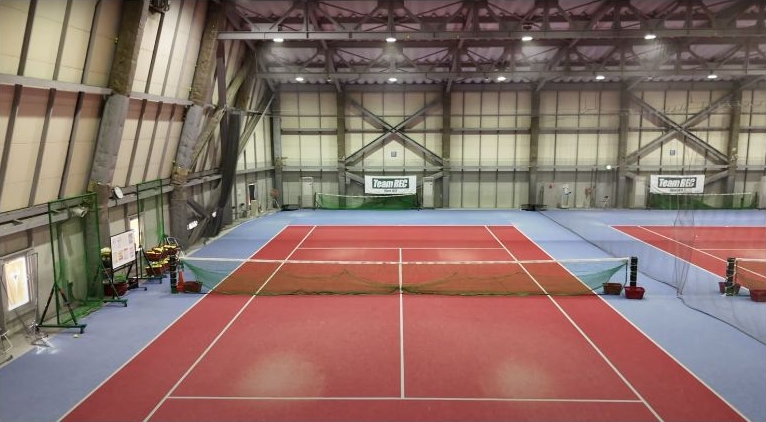
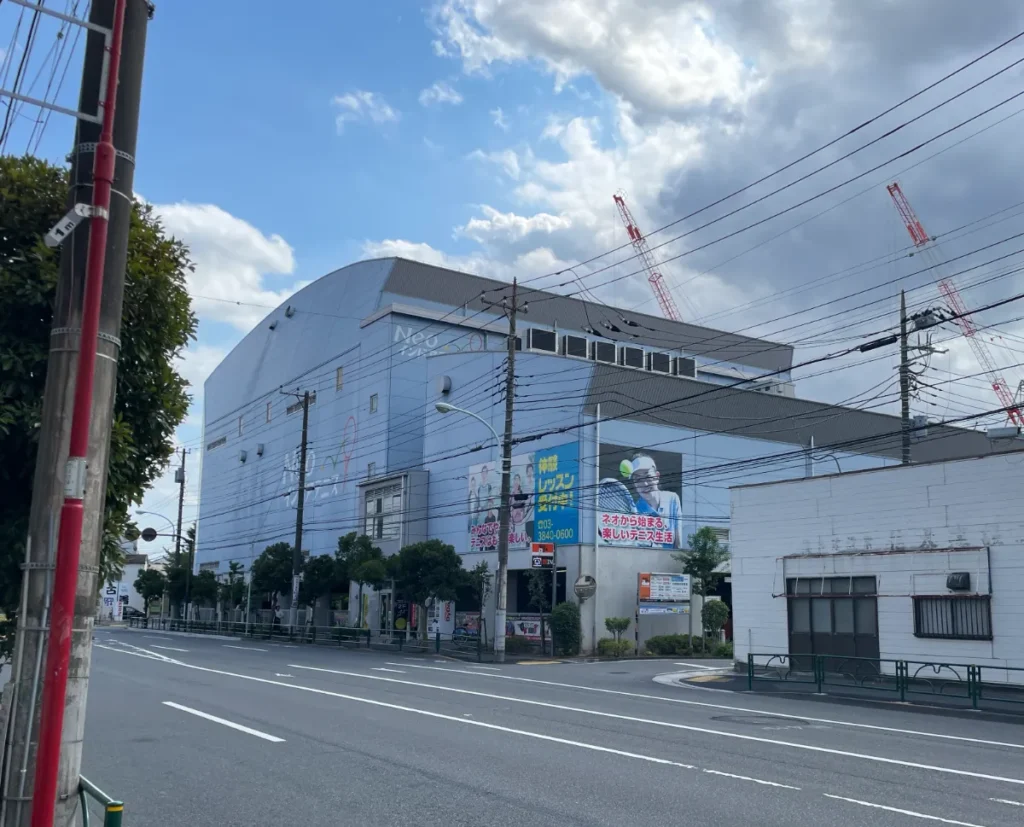
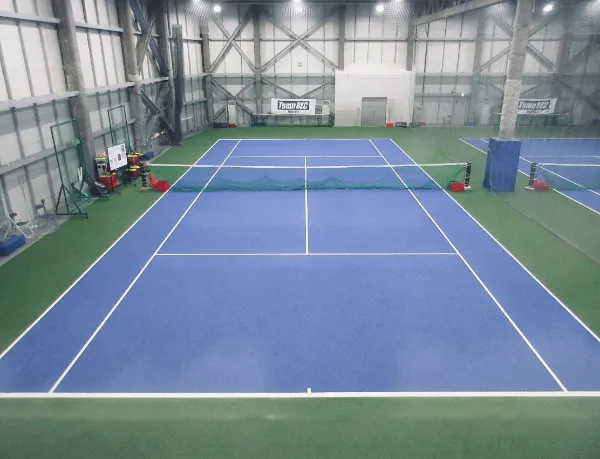
Neo Indoor Tennis School Nishiarai is a large-scale sports facility with five indoor tennis courts. Previously, as part of creating a safe facility, ventilation fans were operated at full power for extended periods, reducing heating and cooling efficiency and increasing energy consumption from air conditioning operation. To improve this situation, we implemented the energy-focused IoT platform for buildings and facilities Energy from the series, enabling ventilation control that achieves energy savings while maintaining user health and comfort.
Energy enables integrated management of IoT devices such as sensors and cameras through wireless communication. It is characterized by the ability to connect not only industrial sensors but also affordable, high-performance environmental sensors. Another advantage is that existing old instruments and equipment can be used as-is with retrofitted IoT wireless adapters. Traditional EMS (Energy Management Systems) were expensive and required large-scale wiring work, making them difficult to implement in existing small and medium-sized facilities, but Energy allows for energy savings with minimal initial investment.
The system constructed this time has the following configuration.
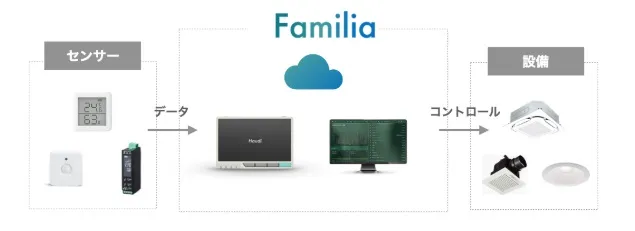
Familia Terminal
This is the core gateway device of the system, which communicates with various equipment and sensors installed at the . It supports a wide range of communication protocols such as Modbus and BACnet, and can also support device-specific proprietary protocols. Remote maintenance and construction of automatic control programs () are performed through this device.
Familia Cloud*
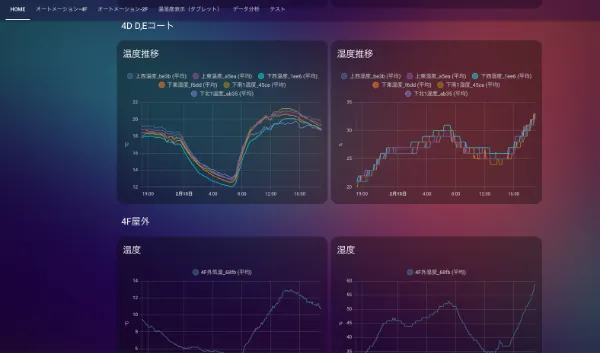
This is a cloud service that manages equipment and sensors installed in buildings. In this system, data is collected from temperature/humidity meters and CO2 sensors within the facility and visualized in the app compatible with iOS, Android, and web. The dashboard in the app displays sensor data in lists and graphs, analyzes indoor environment, and controls ventilation fans.
*Depending on the needs of the implementation site, it is also possible to complete the system using only a local network without using Cloud.
Implementation Results and Future Outlook
With the implementation of Energy, the temperature, humidity, and CO2 concentration within the facility were first visualized, enabling us to determine appropriate ventilation operation methods for this facility. As a result, ventilation volume adjustment became possible without compromising user health and comfort, which improved the overall heating and cooling efficiency of the facility and contributed to energy savings.
Currently, basic operation of ventilation fans and air conditioners is performed by automatic control, but manual control as needed is also possible on the dashboard, reducing administrator workload. Furthermore, we are continuing to collect data and conduct analysis toward detailed control with sensor-equipment coordination and long-term operation.