


PHYSICAL AI SOLUTION
that senses, thinks, and moves Sites.
From concept • implementation • operational improvement, while leveraging existing facilities. We connect hardware, software, and AI in one team to deliver Physical AI to Sites.
What is Physical AI?
AI that existed in words and screensis now entering a stage where it senses the physical worldand moves things at Sites.
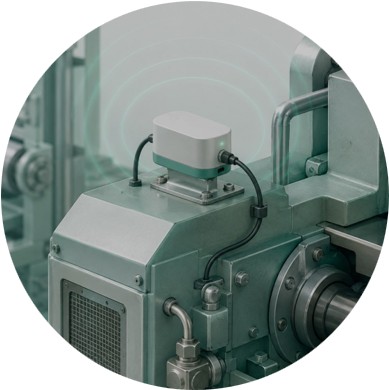
Turn what's happening at Sites into data from sensors, cameras, and existing instruments.
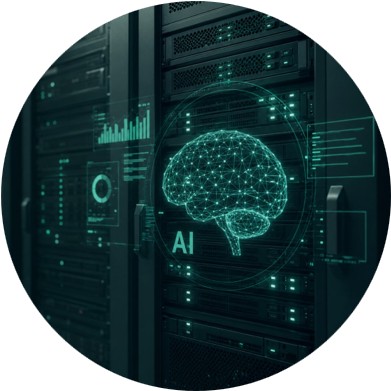
AI at the edge or in the cloud judges anomalies, waste, and the next action to take.
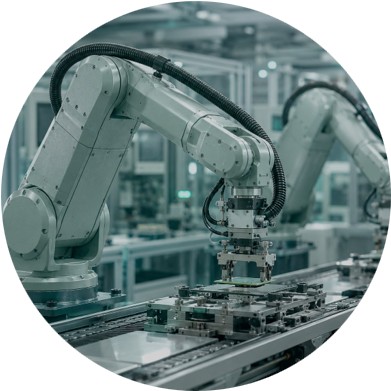
Transport, manufacturing equipment, HVAC, lighting, etc. Return judgment results to physical world actions.
The Physical AI Spectrum
The definition of Physical AIranges from automated control of existing equipment to humanoids,spanning a wide spectrum.
The left side is easier to commercialize, and most Sites start with " making currently operating equipment smarter ".
Automated control of existing equipment
Production equipment, HVAC, lighting.
Add measurement and control retroactively to currently operating systems.
● ● ●
Implementation is progressing
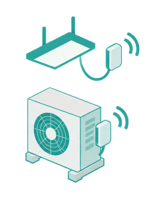
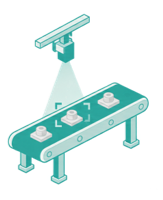
Visual inspection • monitoring
Cameras and edge AI judge scratches • foreign objects • anomalies in place of humans.
● ● ●
Implementation is progressing
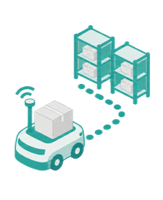
Transport • sorting
AGVs • AMRs and sorting equipment move autonomously within premises.
● ● ●
Adoption is expanding
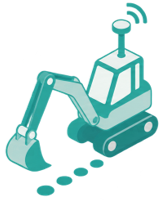
Automation of construction machinery • vehicles
From remote operation to autonomous driving of construction machinery and on-site vehicles.
● ● ●
Sites demonstration stage
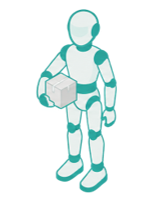
Humanoids
General-purpose bodies that take over human tasks as-is.
● ● ●
Research • demonstration stage
Make currently operating equipment smarter
Introduce equipment that can mimic human movements
Humanoids are just one symbol. At most Sites, it starts with making currently operating equipment smarter.
Grand Design for the Field
What to measure, what to automate, and what people should focus on.
The design that determines a company's future—we support all the way through drawing, implementing, establishing, and deployingit.
01
Draw
Design the future of Sites
What to measure, where to start, in what order to invest. We draw from current state analysis to prioritization of measures.
Physical AI Design
02
Implement
Deploy equipment, data infrastructure, and AI
Equipment selection • design, data infrastructure construction, AI implementation. Integrated under one responsibility without fragmentation.
Physical AI Engineering
03-1
Establish
Integrate into Sites operations
We iterate adjustments based on operational data and support until it fits into human procedures.
Physical AI Growth
03-2
Deploy
To other sites • horizontal deployment • commercialization
What proved effective at one Sites is expanded to other equipment and sites, and repackaged as a product as needed.
Physical AI Growth
Scope of Work
Through three phases—Design • Engineering • Growth—we handle everything consistentlyfrom concept to establishment.
Ordering strategy, equipment, communications, data, AI, and operations separately increases handoffs of requirements and responsibilities. Haudi connects the three phases with one design philosophy.
01 / DESIGN
Physical AI Design
Research • diagnosis
- Current state research • Sites diagnosis
- Inventory of existing equipment • systems • business processes
Grand design
- Implementation blueprint (sensor placement • communication methods • data points)
- Design of what to measure and what to judge
- Overall system architecture
- Security policy
Decision materials
- Roadmap development for implementation
- Cost and benefit estimates and payback period creation
- PoC design and execution
02 / ENGINEERING
Physical AI Engineering
Requirements • system design
- Requirements definition
- Equipment selection (off-the-shelf or in-house)
- Circuit • board • enclosure design
- Network design
Equipment • Sites
- Sensor • device manufacturing or procurement
- Signal acquisition from existing instruments
- Communication infrastructure setup (LTE • LoRa • private network)
Data • AI • control
- Legacy system renewal
- Data migration (paper • Excel • legacy DB)
- Data infrastructure, management dashboard, and app development construction
- Existing system integration
AI • control
- Training data preparation
- AI model implementation
- Equipment control and automated control logic
■ Areas other companies tend to avoid
03 / GROWTH
Physical AI Growth
Operations • improvement
- Monitoring and maintenance operations
- Continuous tuning based on operational data
- AI Model Retraining and Accuracy Improvement
- Performance Measurement and Reporting
- Additional Sensors • Additional Features
- Manual Creation
- Training for Sites
Deployment
- Deployment to Other Equipment
- Deployment to Other Sites
- Horizontal Deployment to Group Companies
Commercialization
- Product Commercialization
- Support for Customers' New Business Development
- External Sales • OEM
■ Areas Other Companies Tend to Avoid
If any one of these is missing, you won't reach the point of running AI at Sites.
Physical AI Design
What to measure and where to start.Accompanying from the design of the business model itself.
Design Process
STEP 1
Current State Analysis
Inventory of equipment • systems • operations. Identify where data is lacking and where human resources are being depleted.
STEP 2
Sites Diagnosis
Actually enter Sites to check instruments • wiring • communication environment • personnel flow.
STEP 3
Grand Design
Develop a multi-year plan for what to implement and in what order.
STEP 4
ROI Estimation
Assign costs and payback periods for each measure to inform investment decisions.
STEP 5
PoC Design and Implementation
Validate on a small scale, focusing on areas of high uncertainty.
Expected Outcomes
AI Implementation Roadmap
Multi-year implementation plan and priorities
Investment Effect Estimation
Cost • Savings • Payback Period
Sites Diagnosis Report
Equipment • Communication • Operational Constraints
PoC Results and Decision Criteria
Rationale for Proceeding/Stopping and Next Steps
Physical AI Engineering
As the brainof Sites,we integrate processes including equipment selection, design, and data infrastructure construction.
From equipment selection, communication, data infrastructure, AI, to control. We eliminate fragmentation of vendors by process and implement speedily and flexibly.
Conventional Sites
Vendors change with each process, requiring handoffs of requirements and responsibilities each time. Schedule delays and requirement gaps/drift are likely to occur.
Requirements Definition
Consulting
Equipment Selection
Trading Company • Manufacturer
Communication
Electrical Contractor
Data Infrastructure
Development Company
AI Implementation
AI Vendor
Equipment Control
Equipment Contractor
Sites Built with Haudi
A single team maintains requirements and overall design, enabling speedy and flexible progress
Haudi— ONE BRAIN / ONE TEAM
Requirements Definition
Equipment Selection • Design
Communication Infrastructure
Data Infrastructure
AI Model
Equipment Control • Handover
Physical AI Growth
We don't stop after implementation.
We make repeated adjustments with operational data,until it fits naturally in people's hands,cycling through the process.
Operate
Notice
Adapt
Fix
01
Monitoring and Maintenance Operations
We monitor to prevent downtime and enter Sites if anomalies occur.
02
Continuous Tuning
We fine-tune thresholds and settings with actual operational data.
03
Performance Measurement and Reporting
We quantify and report what worked and to what extent.
Maturity Model
We assess the current state of Sites across five layers,and determine which service to apply to which layer.
We combine appropriate support for the situation, focusing on L2-L3 where many Sites tend to stall.
Sites State: What to measure is not determined
Haudi Value Proposition: Walk through Sites and define together what measurements would change decisions
Recommended Support: Design
Platform & Packages
Don't Build Recurring Sites Challenges From Scratch Every Time.
Based on Common Platform Familia and Application-Specific Packages, Design Only Sites -Specific Parts. Shorten Development • Deployment Time and Leverage Implementation for Future Projects.
Customer-Specific Development
Screens • Reports, Sites -Specific Adjustments, Custom External Integration
Familia ENAERGY
Facility Energy Management via Retrofit Devices
Familia VISION
Visual Inspection • Security via Edge AI Video Analysis

High-Volume Data Transfer for Offline Research Equipment
Platform
Familia
- Collection: LoRa • LTE • Modbus • BACnet
- Storage • Normalization
- Device Management
- Authentication • Authorization
- API • Generative AI Integration
Sites Equipment
Power Sensors
Environmental Sensors
Network Cameras
PLC • Instruments
HVAC • Lighting
Research Equipment