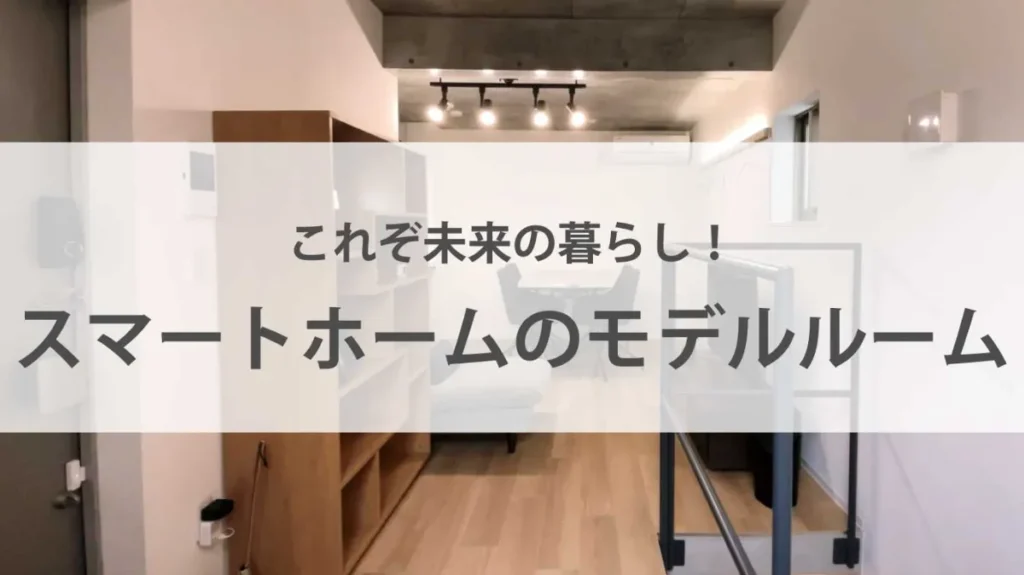
We installed the smart home system ' Familia ' in a single-occupancy rental apartment completed in March 2022 and have opened it as a model room! This article introduces an explanation of smart homes, an overview of Haudi ' Familia ', and the implementation details in the model room.
What is a smart home in the first place?
How much do you, the readers of this article, know about smart homes?
Smart homes are the housing of the future that will become standard, so it's worth knowing about them. First, let's briefly explain smart homes.
About Smart Homes
A smart home is a concept that emerged around the mid-2010s, representing a new way of housing that utilizes cutting-edge technology. By linking smartphones, smart speakers, home appliances, and sensors, it provides residents with a " convenient • comfortable • secure • safe " lifestyle.
In smart homes, you can turn lights on and off and adjust air conditioner temperatures by operating a smartphone app or speaking to a smart speaker. Depending on app settings, you can also automatically control IoT devices. For example, you can unlock a smart lock hands-free when approaching the entrance, or automatically open curtains in the morning, allowing you to live a stress-free life.
The prototype of smart homes is the " smart house " proposed in the United States in the 1980s. Smart houses had long been attracting attention as technology to optimize residential energy consumption. On the other hand, since IoT technology emerged in the early 2010s with the development of wireless communication technology, the emphasis has shifted toward pursuing resident convenience • comfort, and the term was updated to " smart home ".
IoT (Internet of Things) is called the " Internet of Things " and refers to technology that enables various things to connect to the internet for more convenient use. With this technology, you can operate home appliances from your smartphone or check the current room temperature and humidity remotely.
As a fun fact, smart home terminology commonly used in Japan often relates to energy. For example, the management system for IoT devices in homes is called HEMS (Home Energy Management System). Perhaps this is a First Name from when it was called a smart house. In Japan, there is still a strong tendency to define smart homes as housing specialized in energy management, and the country lags significantly behind other nations in pursuing convenience.
Evolution of IoT Devices
The performance of IoT devices used in smart homes is being improved year by year, enabling them to provide more convenient functions. For example, IoT intercoms allow you to respond to visitors even when away from home using an app, and you can check intercom footage from several days ago via the cloud through the app.
Also, recently various housing equipment has been made IoT-enabled. Water heaters, electric blinds, pet feeders, and even aroma diffusers have been IoT-enabled, allowing you to enjoy smartphone and smart speaker control at affordable prices. If you can properly select and install these devices in your home, you will be able to live a more convenient and comfortable life.
Challenges for Smart Homes to Become the Standard in Housing
Although smart homes have many advantages as mentioned above, they have not yet penetrated actual housing. The main reasons include the following issues:
- Since smartphone operation apps differ for each IoT device manufacturer, many apps must be installed, complicating daily routines.
- Implementation costs are high. Especially in existing homes, it is difficult to replace air conditioners and water heaters with Wi-Fi compatible ones.
- There are few places where you can experience the value of smart homes
- Japan has high standards for housing equipment installation, and it takes time for the latest IoT devices to be released.
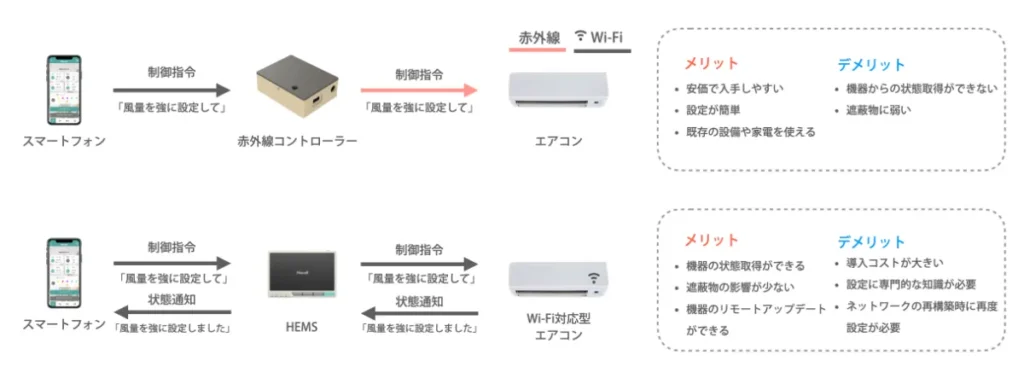
Recently, many infrared controllers have been sold to easily make homes smart. An infrared controller is a compact device that consolidates multiple infrared remotes into one. It can read infrared patterns emitted from TV and air conditioner remotes and emit infrared signals instead of the remote, allowing you to consolidate and operate multiple appliances from a single app. However, infrared controllers have the following weaknesses:
- Only one-way communication is possible, so the current state of devices cannot be obtained.
- They are vulnerable to obstructions, and depending on the installation location, infrared signals may not reach appliances.
Smart Home System ' Familia '
What is Familia
Familia is the First Name of Haudi 's smart home system. Familia means " family " in Spanish, embodying the idea that " we breathe life into homes, making them something you can love like family. "
In smart homes with Familia installed, multiple smart devices from different manufacturers can be integrated and controlled from a single app. You can also accurately monitor the current operating status of devices. Sensor measurement data and smart device usage history are automatically saved to the cloud, allowing you to check past room conditions at any time.

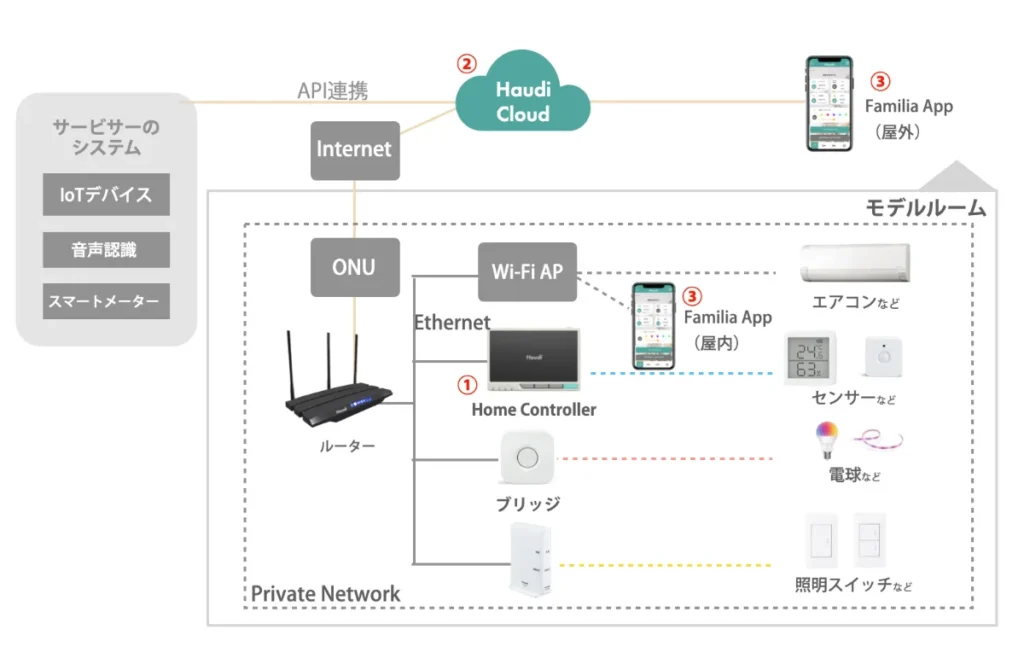
The Familia system mainly consists of the following three elements:
- Home Controller
This is the home control controller that forms the heart of the system. It is equipped with various wireless communication functions such as Wi-Fi and BLE, and connects to all IoT devices in the home. It serves as a bridge connecting smart appliances and sensors with smartphones and smart speakers. - Haudi Cloud
This is a cloud server to maximize smart home functionality. With this cloud, you can control IoT devices in your home even when away, and view data obtained from sensors in graphs. It also has functions for remote maintenance • anomaly detection, API management for various service integrations, and digital certificate authority functions for encrypted communication authentication. - Familia App
This is the application used to control IoT devices. Device control and automation (automatic device control) settings are performed from this app.
Features of Familia
HEMS controllers sold in Japan only support their own IoT products or IoT products from major domestic manufacturers, and often cannot connect IoT products from overseas manufacturers or domestic venture manufacturers. On the other hand, Familia 's Home Controller supports a wide range of manufacturers, allowing relatively free selection of devices to install.
※ Even for products not currently supported by Home Controller, we will consider technical feasibility upon request.
Also, when communicating with IoT devices from the Familia app via Home Controller, the system is designed to use the intranet (a closed network within the home) as much as possible without using the internet. This reduces the frequency of home-related information traveling across the internet, mitigating hacking risks. However, there will inevitably be occasions when communication with the cloud occurs via the internet, and in such cases, encrypted communication is used so that others cannot see the content of the communication.
Implementation in Model Room
IoT Device Placement
The model room where we installed Familia this time is a 1F+B1 maisonette-type single-occupancy apartment. We arranged furniture and IoT devices with 1F as the living room and B1 as the bedroom.
The actual device placement was done as shown in the following diagram.
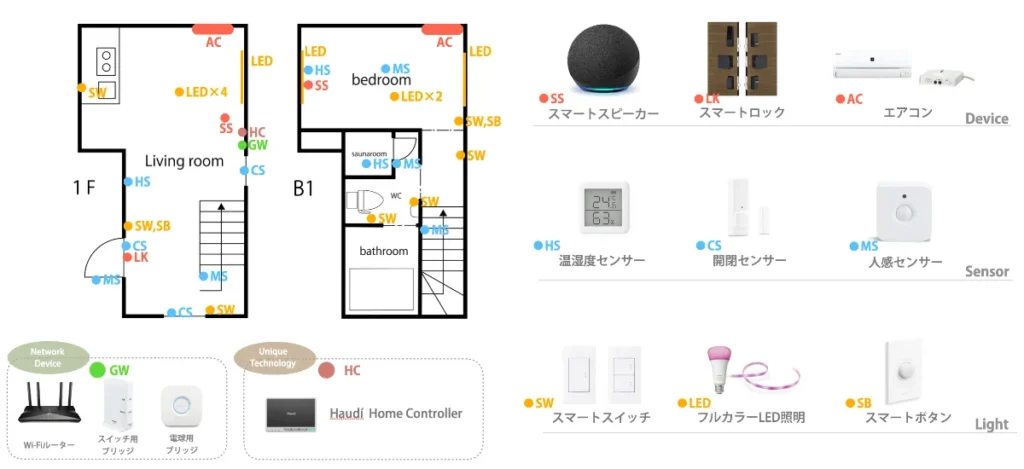
Smart speakers → 2 units (1 per room)
Smart lock → 1 unit
Wi-Fi compatible air conditioners → 2 units (1 per room)
Temperature/humidity sensors → 2 units (1 per room)
Open/close sensors → 3 units (installed at 1 door and 2 windows)
Motion sensors → 5 units
IoT lighting switches (single • double) → 7 units
Full-color LED lights → 6 units
Smart buttons → 2 units
A total of 30 IoT devices were installed in one room!
Control Demonstration
The model room is featured in this video. You can see how devices are controlled from the Familia app and how devices are controlled with a smart speaker equipped with the AI voice recognition service Alexa.
automation Demonstration
In the model room, we have implemented automatic lighting control aligned with residents' daily routines.
Summary
Haudi 's Familia is a system that can deliver an exciting lifestyle to residents with sophisticated communication design and security systems created by engineers from the early days of personal computers. Although there are initial and running costs, it will undoubtedly realize a " convenient • comfortable • secure • safe " future lifestyle. When installing in an apartment building, functions can also be implemented to simplify property viewing attendance tasks using smart locks and to remotely maintain vacant units.
Why not make your home a smart home on this occasion?