

As energy prices rise and the need to address carbon neutrality becomes urgent, leveraging the latest technologies is key for companies to advance energy efficiency. This article introduces efficiency improvements using IoT sensors and cloud-based energy management tools, along with specific success stories.
Background on the Need for Energy Efficiency
The government has set a goal to achieve carbon neutrality by 2050 and has established policies such as the Energy Conservation Act and greenhouse gas emission reduction targets. In particular, the goal of reducing greenhouse gas emissions by 46% from fiscal 2013 levels by 2030 serves as a powerful guideline promoting corporate energy efficiency.
Additionally, the impact of rising energy prices on corporate management is serious. Energy efficiency initiatives are essential to prevent cost pressures and declining competitiveness. Conversely, advancing efficiency can reduce energy costs, creating financial flexibility and enhancing competitiveness while also fulfilling social responsibility for environmental stewardship. Thus, energy efficiency holds the potential to simultaneously realize three important benefits: cost reduction, enhanced competitiveness, and reduced environmental impact.
Latest Technologies Supporting Energy Efficiency
We introduce IoT sensors and cloud-based energy management tools as prime examples of cutting-edge technologies that significantly contribute to improving corporate energy efficiency. By combining these technologies, companies can dramatically improve their energy efficiency and pursue sustainable business operations and reduced environmental impact.
Visualization and Optimization of Energy Consumption with IoT Sensors
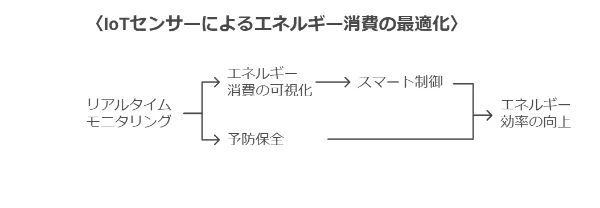
IoT sensors are essential technology for improving corporate energy efficiency. Their main features and benefits are as follows.
Real-time Monitoring
Energy consumption in factories and offices can be visualized in real time. For example, some manufacturers monitor power usage on production lines minute by minute, identifying equipment with low utilization rates to reduce wasteful power consumption.
Smart Control
Equipment is automatically controlled according to usage conditions. One commercial facility achieved a 10% reduction in monthly power consumption by using sensors to detect human movement and automatically turning off lighting and air conditioning in areas without visitors.
Preventive Maintenance
Equipment conditions are constantly monitored to detect abnormalities and deterioration early. This prevents declines in energy efficiency and also enables reduced repair costs. For example, at one factory's pump facility, vibration sensors were used to detect abnormalities in advance, preventing major shutdowns.
Cloud-based Energy Management Tools
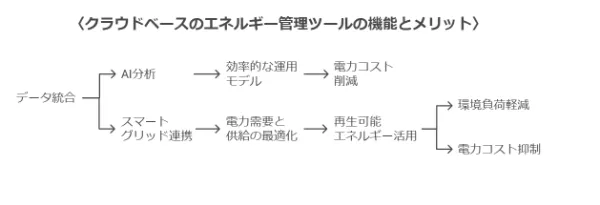
Cloud-based energy management tools work in conjunction with IoT sensors to dramatically improve energy efficiency. Below are their specific functions and benefits.
Data Integration and Analysis
Data from multiple locations and facilities is centrally managed and analyzed using AI. For example, one retail chain used cloud tools to integrate and manage data from stores nationwide. By comparing energy usage trends at each store and applying the most efficient operational model to all stores, they reduced annual power costs by 15%.
Smart Grid Integration
By combining IoT sensors and cloud tools, power demand and supply for regions and facilities are optimized. One factory introduced a smart grid system utilizing renewable energy. They built a mechanism to store energy from solar power generation and supply it during peak demand. As a result, they significantly reduced fossil fuel dependence, simultaneously achieving reduced environmental impact and controlled power costs.
Specific Success Stories
Osaka Metro
Osaka Metro uses Sushi Sensors and load fluctuation sensors to monitor the condition of supply and exhaust fans. Sushi Sensors measure vibration and surface temperature of supply and exhaust fans and wirelessly transmit data. Load fluctuation sensors are attached to motors to detect fan belt slippage and fan imbalance. This initiative has enabled early detection of equipment abnormalities and the fastest possible response.
Tokyo Portcity Takeshiba (Office Building)
At Tokyo Portcity Takeshiba, cameras and IoT sensors are installed indoors and outdoors in terraces, free spaces, and other common areas. In addition to environmental information such as temperature, humidity, and CO2 concentration, foot traffic data and congestion information are collected in real time and analyzed in real time on SoftBank's IoT platform. Furthermore, energy management through BEMS is also implemented, achieving both energy savings and comfort.
Grand Hyatt
Grand Hyatt has implemented Trane's Tracer® Ensemble™ building management system for remote building operations management. Additionally, a cloud-based energy management system " energy • performance " enables real-time monitoring of energy usage for efficient operations. As a result, they achieved the company-wide goal of reducing energy consumption and greenhouse gas emissions by 25% per square meter.
Haudi provides an energy management platform " Familia Energy " that leverages the latest technologies such as IoT, AI, and cloud. It visualizes power consumption and temperature/humidity data collected by IoT sensors and automatically controls equipment to prevent energy waste throughout the building. Using IoT sensors and wireless adapters minimizes construction work during installation, offering the benefit of reduced implementation costs.

Summary
IoT sensors and cloud-based energy management tools are the trump card for energy efficiency. Implementing these technologies makes it possible to balance environmental stewardship with cost reduction. Referencing specific success stories, why not start by analyzing your current energy usage and considering the optimal approach for your company?