

As companies face rising energy prices and the need to address carbon neutrality, improving corporate energy efficiency has become an urgent priority. Demand Response (DR) is gaining attention in this context, and recent advances in IoT technology are creating an environment where DR can be implemented at lower cost than before. This article explains the basics of DR, implementation methods using IoT technology, and success stories.
What is Demand Response (DR)?
Basic Mechanism of DR
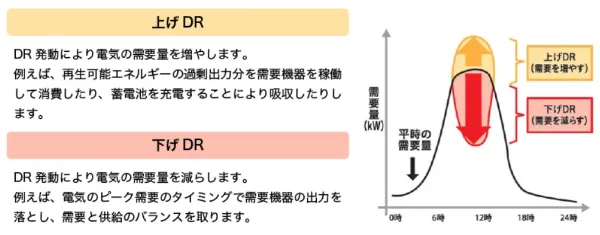
Demand Response (DR) is a mechanism that optimizes the balance of electricity supply and demand by adjusting power demand. There are two types: downward DR which reduces electricity use during peak times, and upward DR which encourages usage during low-demand periods, thereby ensuring stable power supply.
Benefits for Companies
Implementing DR brings the following benefits to companies:
- Reduction of Electricity Costs: By reducing peak-time usage, companies can optimize electricity rates and obtain incentives (rewards).
- Improved Energy Efficiency: Visualize electricity usage and reduce wasteful consumption.
- Reduced Environmental Impact: Contribute to achieving carbon neutrality.
Furthermore, the spread of DR is expected to significantly contribute to achieving the government's renewable energy ratio target (36-38% by 2030).
IoT Accelerates DR
Why IoT Accelerates DR Implementation
While traditional DR required manual adjustments, IoT enables automation. For example, IoT sensors and smart meters allow real-time monitoring of electricity usage, automatically optimizing control during peak times. Analysis of accumulated power usage data enables peak cutting and automatic generation of optimal operation schedules. Moreover, as cloud integration advances, centralized energy management across multiple sites and optimal remote control become possible.
DR Realized at Low Cost Through IoT Utilization
By utilizing IoT, companies can now implement DR at low cost without significantly modifying existing facilities. Many of the following IoT devices and systems can be retrofitted and offer significant benefits:
- Smart Meters: By attaching IoT adapters to existing power meters, power data can be obtained in real time, enabling automatic adjustment during DR events (*).
*A DR event is a method for adjusting the balance of electricity supply and demand. Power companies encourage consumers to save electricity or change usage times, thereby reducing peak-time power consumption. This is expected to stabilize the power grid and enable efficient use of renewable energy. - Wireless IoT Sensors: Install wireless sensors on each facility to build a system that automatically suppresses peak power usage.
- Cloud-based Energy Management System (EMS): Integrate data from each facility on the cloud and use AI to optimize power load and maximize DR effectiveness.
By utilizing IoT in this way, companies can implement DR mechanisms without large-scale capital investment, achieving both electricity cost reduction and improved energy efficiency.
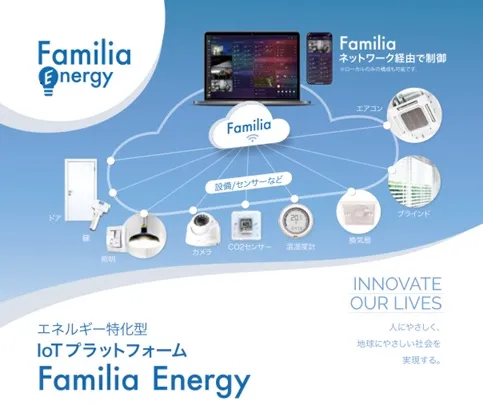
provides an energy management platform Familia Energy that utilizes the latest technologies such as IoT, AI, and cloud. It visualizes power consumption and temperature/humidity data collected by IoT sensors and automatically controls facilities to prevent energy waste throughout the building. By using IoT sensors and wireless adapters, construction work during implementation can be minimized, offering the advantage of reduced implementation costs.
Success Stories of IoT × DR
The fusion of IoT and DR is contributing to the optimization of energy management in various fields. Below are specific success stories.
Miyakojima Energy Management System
In Miyakojima, Okinawa, an Energy Management System (EMS) developed by Nissin Systems is being used to improve energy efficiency in homes and businesses. This initiative, which began in 2016 targeting the entire island, involves installing EcoQute, solar power generation, and storage batteries in detached houses, apartment buildings, and businesses, and remotely monitoring and controlling them via the cloud to achieve effective use of renewable energy and optimization of electricity supply and demand.
As of 2025, this project has moved beyond the demonstration phase to actual business deployment, with the system operating for approximately 1,000 households. It is attracting attention as an advanced initiative aiming for sustainable energy use across the entire island.
IoT Utilization in Retail – Walmart
Walmart has implemented an IoT-based DR system to optimize energy consumption. By installing sensors in refrigerators and air conditioning equipment at each store and centrally managing this data, they have enabled real-time temperature adjustment and power consumption optimization.
During the COVID-19 pandemic, they flexibly adapted to changes in operating hours and achieved significant labor savings compared to manual adjustment by automatically controlling equipment across multiple stores. This has simultaneously achieved improved energy efficiency and reduced operating costs.
Demand Response Utilization in Manufacturing – Asai Germanium Research Institute Co., Ltd.
Asai Germanium Research Institute, which manufactures raw materials for health foods and cosmetics, actively incorporates demand response methods and implements energy management based on power market price fluctuations using visualization of electricity. Specifically, they have introduced upward DR to shift cleaning and air conditioning operations to times when demand is low and electricity prices are cheap, and during times when market prices surge, they make adjustments such as reducing air conditioning equipment operation to optimize electricity usage.
Summary
Demand Response (DR) is a mechanism that enables companies to achieve both cost reduction and environmental impact reduction through optimization of electricity supply and demand. Particularly by utilizing IoT, more cost-effective and efficient DR implementation becomes possible, and many companies are beginning to adopt it. In an era where electricity supply and demand adjustment is becoming easier and collaboration with renewable energy is advancing, implementing IoT × DR may become an important strategy for enhancing corporate competitiveness.