

As health awareness grows, the healthcare faces a serious shortage of personnel. This has brought attention to healthcare that leverages wearable devices and sensing technology, which is significantly transforming healthcare delivery from daily health management to home care telemedicine. This article explores the current state of healthcare through specific examples of vital sensors and remote medicine.
What is Healthcare
in the medical health field, or healthcare , is not merely about introducing digital devices, but a movement to transform the healthcare delivery system and health management mechanisms themselves based on data.
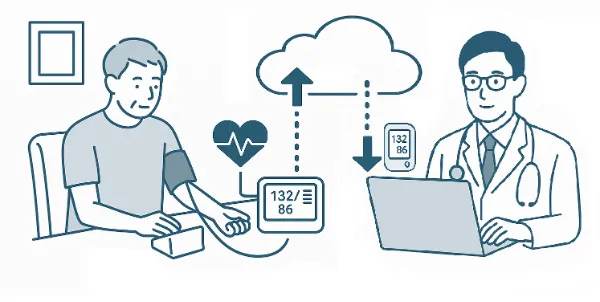
Traditionally, medical consultations required visiting healthcare facilities and were conducted within limited timeframes. However, wearable devices and IoT sensors now collect health data daily, making it possible to share this information with physicians via the cloud regardless of location or time. These systems are advancing early disease detection, treatment optimization, and applications in preventive medicine.
Wearable devices equipped with vital sensors, in particular, play a crucial role in supporting healthcare as a bridge connecting individuals and medical institutions.
Wearable Devices Supporting Health Management
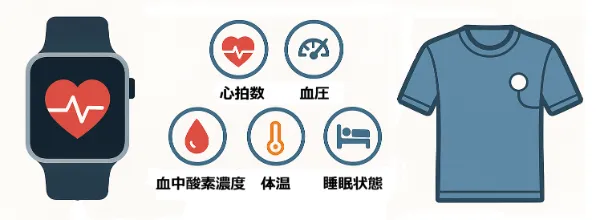
Typical data collected by wearable devices includes heart rate, blood pressure, blood oxygen levels, body temperature, and sleep patterns. These are accumulated unconsciously during daily life and have the power to visualize health conditions over the long term.
Case Study ① Apple Watch
The Apple Watch is equipped with functions to measure heart rate, blood oxygen levels, and electrocardiograms. Particularly noteworthy is its ability to detect arrhythmias and issue warnings. Cases have been reported in Japan where Apple Watch features enabled early detection of atrial fibrillation, allowing physicians to respond quickly and prevent serious complications. Additionally, the fall detection feature has automatically contacted emergency services when elderly users have fallen, truly serving as a lifeline you wear .
Case Study ② Omron HeartGuide
The HeartGuide , developed by Japanese manufacturer Omron, is a wristwatch-type blood pressure monitor. Because it can be worn daily, it enables collection of blood pressure data during everyday activities that conventional home blood pressure monitors could not obtain. Its blood pressure measurement accuracy has been certified as a regulated medical device, ensuring reliability in the medical . This device has made risk management for hypertension and lifestyle diseases easier and is being utilized in consultations with physicians.
Case Study ③ Garment-Type Sensors
In recent years, development of garment-type devices with sensors woven into fabrics has progressed and entered the practical application stage. Latest research has shown that smart shirts capable of measuring vital signs such as heart rate and respiratory rate could potentially be used for monitoring post-operative patients and identifying individuals at high risk for heart disease. A major advantage of garment-type devices is the minimal burden on patients, and they are expected to see expanded applications in rehabilitation support and preventive medicine, in addition to inpatient management.
As these examples demonstrate, wearable devices are evolving from an extension of health checkups to preventive medicine integrated into daily life . Data is accumulated in the cloud, and systems for automatic anomaly detection by AI are also being established. The trend of detecting small daily changes early and preventing serious complications is expanding.
Telemedicine and Sensing Technology
Triggered by the COVID-19 pandemic, telemedicine (online consultations and remote monitoring) has expanded in countries worldwide and in Japan. Telemedicine systems utilizing vital data acquired by sensors are expected to play an increasingly important role in future healthcare systems.
Case Study ① Philips eICU
Philips, headquartered in the Netherlands, provides the eICU program, which enables continuous remote monitoring of intensive care unit (ICU) patients. Through a system where patient vital data is monitored at a central command center and specialists provide advice as needed, hospitals in regions with specialist shortages can more easily receive advanced treatment support.
It has been implemented at multiple large-scale medical institutions in the United States, including the Department of Veterans Affairs (VA), with one hospital reporting an ICU mortality rate reduction of over 20% and shortened hospital stays.
Case Study ② Home Healthcare Projects in Japan
In Japan, initiatives to support home healthcare with are advancing in response to an aging population. In projects led by local governments and the national government, systems have been introduced where patients transmit blood pressure and electrocardiogram data measured at home to the cloud, allowing physicians to monitor remotely. This enables patients to receive specialized medical care while at home and is expected to improve consultation efficiency and reduce burden for physicians.
Systems Supported by Communication Technology and AI
Supporting the development of such telemedicine is the advancement of communication technology. 5G is suitable for diagnostics using high-definition images and highly responsive telemedicine, while LPWA (Low Power Wide Area) is effective for transmitting daily sensor data over wide areas with low power consumption. Furthermore, by combining sensors with AI, systems that automatically notify physicians when anomalies are detected are also progressing in development and practical application.
Challenges and Outlook
While the use of wearable devices and sensing technology expands, challenges remain. Security and privacy protection regarding personal data handling, and lack of standardization among devices and services are factors that make adoption difficult for users and medical institutions.
Moving forward, IoT platforms that can integrate and centrally manage vital data and lifestyle data will be key. Demonstrations are progressing for AI-based disease prediction, lifestyle improvement recommendations, and comprehensive regional health management services linked with smart cities, with momentum accelerating toward social implementation. Like in the energy and urban infrastructure sectors, scalable IoT platforms will become the foundation supporting the future of healthcare .
Conclusion
The fusion of wearable devices and sensing technology holds the potential not merely to evolve health gadgets, but to transform medical and social systems themselves. The flow of real-time data connecting people's lives with the medical , from daily health management to telemedicine, is irreversible. Going forward, while addressing challenges such as security and standardization, the advancement of healthcare that comprehensively supports individuals and local communities is anticipated.