


With the government's call to action, we are witnessing SDGs permeating widely from the business world to the citizen level. Here, we will confirm the meaning of SDGs, review Japan's priority issues, and explain initiatives toward SDGs, mainly through IoT utilization, with specific examples.
What are SDGs?
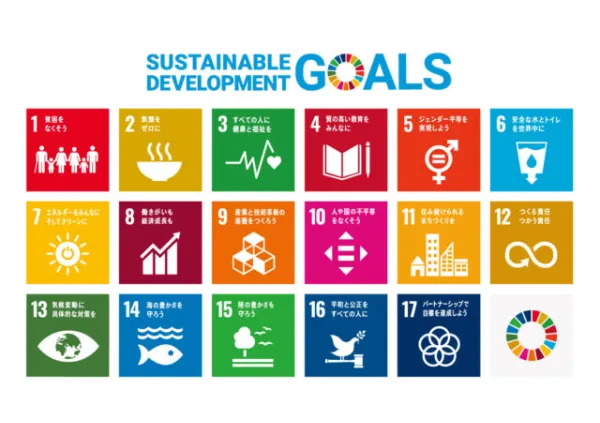
SDGs stands for Sustainable Development Goals, referring to universal goals that the entire world works toward to realize a sustainable and better society. Adopted at the UN Summit in 2015 as part of the " 2030 Agenda for Sustainable Development ", they aim for achievement by 2030.
SDGs consist of 17 goals, summarizing the challenges facing the world from three perspectives: " social aspects such as poverty, hunger, and education ", " economic aspects such as effective use of energy and resources, improvement of working styles, and elimination of inequality ", and " environmental aspects such as the global environment, climate change, and environmental protection ". A key feature is that action is required not only from governments but also from private companies and individuals.
Eight Priority Issues for Japan
In response to global movements, in 2016, the Japanese government established the " SDGs Promotion Headquarters " and formulated the " Implementation Guidelines for Sustainable Development Goals (SDGs) ". Within this, eight goals are designated as priority issues for Japan to focus on.
- A society where all people can thrive • Achieving gender equality
- Health • Achieving longevity
- Creating growth markets, regional revitalization, science and technology innovation
- Building sustainable and resilient national land and quality infrastructure
- Energy conservation • Renewable energy, disaster prevention • Climate change measures, circular society
- Conservation of biodiversity, forests, oceans, and other environments
- Realizing a society of peace, security • and safety
- Framework and means for SDGs implementation
With such national policies, companies are also accelerating their efforts toward achieving SDGs. SDGs initiatives are not only effective for social contribution and gaining trust, but in the medium to long term can enhance corporate value and serve as a survival strategy. They are expected to lead to securing diverse talent, new partnerships, and innovation.
SDGs and ICT • IoT
While there are various approaches to SDGs, corporate initiatives often draw attention to the utilization of ICT (information and communication technology) such as IoT, AI, and big data. This also corresponds to " science and technology innovation " cited as a priority issue by the government. By maximizing the use of ICT, it is believed that both the resolution of various social issues and economic development can be achieved, contributing to the attainment of SDGs.
The Ministry of Internal Affairs and Communications' "ICT Global Strategy Council in the Digital Transformation Era" materials explain how ICT can contribute to SDGs by listing ICT solutions for each field. Below are some examples.
Agriculture • Food
- Efficient agricultural operations using smart agriculture systems (remote control, information collection using IoT, etc.)
- Supply and demand management using ICT
Healthcare • Nursing care
- Monitoring, diagnosis, preventive medicine • Early detection using sensors, etc.
- Development of medical diagnostic systems using AI • IoT • Big data
Cities • Regions
- Efficient management • operation of basic infrastructure and living infrastructure • services using AI • IoT • Big data (smart cities)
- Energy management using ICT
Disaster prevention • Environment
- Information collection • Distribution of disaster information using satellites • Drones • Sensors
- Observation • Prediction of various disasters using AI • IoT, etc.
Case Studies of SDGs Initiatives Using IoT
Let's look at specific examples of SDGs initiatives. Here, we will introduce two concrete examples of company-led initiatives, focusing on IoT utilization.
Factory Equipment Continuous Monitoring System Using Wireless Sensors and IoT / Nippon Paper Industries Co., Ltd.
Developed " e-Wireless Patrol® " as a system that continuously monitors signs of abnormalities in large-scale manufacturing equipment using wireless sensors. By accumulating • trend monitoring temperature • vibration acceleration data of operating machinery using IoT, abnormalities are detected early to prevent equipment troubles. Additionally, while previous detection of abnormal signs often relied on people patrolling production Sites sites and relying on experience and intuition, this system is expected to facilitate the succession of skilled techniques and solve labor shortages. (Corresponds to SDGs ⑨ Innovation)
Contributing to Environmental Activities Through Advertising on IoT-Enabled Smart Trash Bin " SmaGO " / Forstec Co., Ltd. + Morinaga & Co., Ltd., etc.
" SmaGO " is a smart trash bin utilizing IoT technology that can monitor waste accumulation status in real-time on the cloud, and has an automatic compression function when the bin is full, greatly contributing to the efficiency of waste collection operations. It generates solar power with a solar panel on top, resulting in zero electricity costs.
While this is a solution deployed by Forstec, companies that use the bin's sides as advertising media can participate in SDGs initiatives as partners as well as sponsors. It was first installed in 2020 with Morinaga as the first partner company and has since spread nationwide. (Corresponds to SDGs ⑪ Cities, ⑫ Production • Consumption, ⑮ Terrestrial resources, ⑰ Implementation means)
Summary
In an era when SDGs initiatives are essential for companies, new business opportunities are also expanding. Even IoT utilization aimed at improving operational efficiency and reducing costs can be reframed as SDGs-contributing initiatives by broadening perspectives and being conscious of SDGs. Let's deepen our understanding of SDGs and actively engage with them.