
As smart technology advances across various scales—from homes and offices to buildings and cities—the opening of "smart hotels" continues, attracting attention as next-generation hotels. Here, we explain what smart hotels are, along with the details and benefits of their smart features.
What is a Smart Hotel?
A smart hotel is a new type of hotel that utilizes cutting-edge information technologies such as ICT, AI, and IoT to streamline hotel functions and services and achieve •sophistication. It can also be viewed as an accommodation-focused hotel that advances DX (Digital Transformation) in the hotel industry.
The greatest feature of smart hotels is arguably the realization of staff reduction and unmanned operations through the use of digital technology. For example, while check-in procedures were traditionally handled face-to-face by front desk staff, smart hotels welcome guests with automated check-in machines. This represents a major benefit for the hotel industry, which suffers from serious labor shortages.
From the guest's perspective, contactless services have come to be favorably received due to the impact of COVID-19. For guests comfortable with digital devices, the conveniences unique to smart hotels—not limited to check-in but including room key systems and in-room facilities—are attractive.
It should be noted that even existing hotels are making progress in partial smart implementations. Automated check-in machines are already operating in many business hotels and capsule hotels, and an increasing number of hotels have installed multilingual tablets in guest rooms that allow requests for room service and other functions.
Smart Hotel Systems and Facilities
Smart hotels are equipped with numerous systems and equipment unique to smart hotels that conventional hotels do not have. Let us introduce some representative examples.
Smart Check-in •Smart Check-out
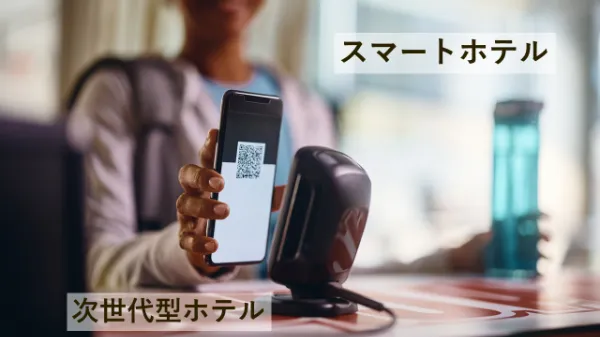
The mainstream smart check-in system is a type where guests themselves can check in using automated check-in machines. Face-to-face interaction with front desk staff is unnecessary, and waiting due to front desk congestion is reduced. At check-out, if advance payment has been completed via a smartphone app or similar means, there is no need to stop by the front desk.
It is often operated in conjunction with a system that eliminates the need for key exchange using smartphones, making everything at check-in •check-out possible without face-to-face contact with staff. Additionally, the introduction of systems that enable identity verification through facial recognition is advancing, making check-in even smoother.
Smartphone Keys (Smartphone as Room Key)
This is a system where guests use their own smartphones as room keys through a smartphone app, replacing the room keys and card keys that have traditionally been exchanged at the front desk. Unlocking is done by holding the smartphone near the key sensor by the doorknob or by giving instructions through the app. It offers high security and eliminates the inconvenience of depositing keys when going out and the risk of loss.
Guest Room Equipment Control
Lighting, air conditioning, curtains, televisions, and other equipment in guest rooms can be controlled from the guest's smartphone or tablets installed in the rooms. On the hotel management side, centralized management is possible with data from sensors in guest rooms, enabling control such as turning off equipment power in unoccupied rooms.
Smart Mirror
A smart mirror is a touch-panel mirror that displays hotel information such as facility guides, as well as information needed during travel such as time, news, and weather forecasts. It can support multiple languages and is equipped with diverse functions such as music content selection, and can be customized according to each hotel's needs. It is a currently noteworthy hotel facility with an attractive stylish appearance.
Smart Speaker
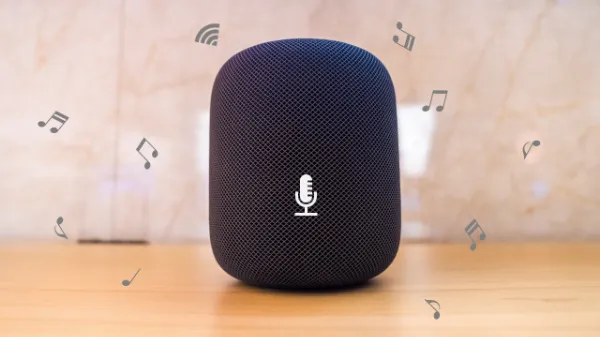
Some guest rooms are equipped with multilingual smart speakers that can control room equipment and explain how to use them. They also serve the role of providing facility announcements in emergencies and can be used as music players.
Guest Room Tablet
Guest room tablets can be described as terminals that consolidate various services provided by the hotel. Operations ranging from explanations of room equipment and facility guides to local tourist information, room service and amenity requests, and control of lighting and air conditioning are all possible with a single tablet.
Benefits of Smart Hotels
Smart hotels, equipped with the above systems and equipment and having significantly changed the nature of hotels, are considered to have the following benefits.
Low Infection Risk
Under the COVID-19 pandemic, while infection prevention measures are essential in hotels, smart hotels can keep infection risks low because contactless •non-face-to-face service is realized in many situations.
Business Efficiency and Labor Shortage Resolution
In the hotel industry, labor shortages have been a major issue even before the pandemic. Smart hotels can operate with fewer staff by streamlining operations widely, including front desk and concierge services, resolving the labor shortage problem.
Enhanced Guest Comfort •Convenience
A system where everything during a hotel stay can be operated with just a smartphone offers high convenience for guests and leads to a comfortable stay. Quick completion of check-in •check-out, the convenience of using one's own smartphone as a room key, and the comfort of freely controlling air conditioning and lighting according to preferences are all benefits. Apps and devices support multiple languages, making them highly convenient for inbound guests as well.
Energy Saving •Cost Reduction
Because the hotel management side can centrally manage and optimize lighting and air conditioning, reductions in power consumption can be expected. Additionally, in smart hotels that operate with fewer staff, the ability to reduce labor costs is also a major point.
Smart Hotels in Japan
While Japan was slower than other countries in developing smart hotels, in recent years, following the COVID-19 pandemic where contactless •non-face-to-face interactions are preferred, new openings have occurred in succession. We introduce three smart hotels.
"Henn na Hotel"
"Henn na Hotel", which opened in Nagasaki Huis Ten Bosch in 2015, is a pioneering presence among smart hotels in Japan. At the time, it attracted attention as the world's first hotel where robots provide service, and indeed, AI-equipped robots handle check-in, porter, and cleaning duties. Facial recognition systems and guest room tablets have also been introduced.
"Prince Smart Inn"
"Prince Smart Inn" is a smart hotel •brand developed by Prince Hotel. The first location opened in Ebisu, Tokyo in October 2020, and as of the end of February 2023, it operates in seven locations nationwide. Based on contactless services, it adopts a system where check-in uses self-check-in with facial recognition, and room key functions and check-out are completed via smartphone. Guest rooms are equipped with smart speakers and smart mirrors, and in the lobby, map-type digital signage supports information provision to guests.
"Hotel B4T"
In January 2023, "Hotel B4T" opened in Iwaki, StationsFukushima Prefecture as the first smart hotel developed by the JR East Group. It is a smart hotel characterized by the use of the transportation IC card Suica, where procedures from reservation through check-in to check-out are completed with Suica and a smartphone. The system of using Suica or Mobile Suica as a room key is also new, and its adoption by a hotel is reportedly a first in Japan. It is also attracting attention as a hotel that has thoroughly streamlined services and advanced non-face-to-face operations and staff reduction •unmanned operations.
Summary
Partly due to the impact of COVID-19, the form of hospitality required of hotels is also changing. While acknowledging the merits of human-provided services, many guests welcome non-face-to-face, speedy, and highly convenient services. Not limited to digital native generations, the demand for smart hotels is likely to increase in the future.