

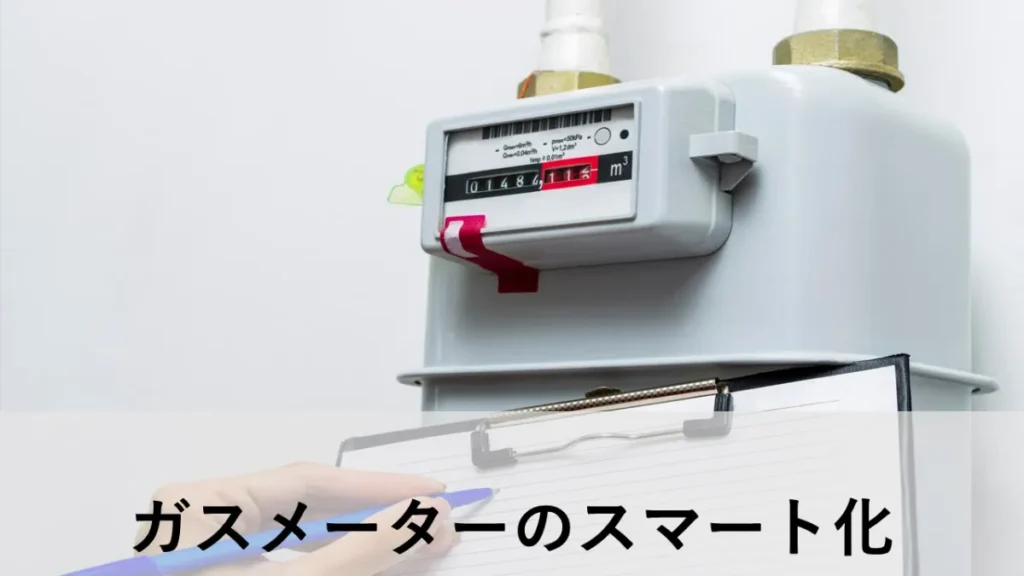
When it comes to meters for electricity, gas, water, and other utilities, it was once common for meter readers to visit each household to check usage. However, with the growing adoption of smart meters, you may have noticed fewer opportunities to see meter readers.
Here, we focus on gas smart meters and explain their functions, mechanisms, and benefits of implementation.
Smart Transformation of Gas Meters
A smart meter is a meter equipped with communication functions. It monitors electricity, gas, and other usage and remotely transmits this information via communication lines, while also offering various other functions. Currently, electricity smart meters are leading the way, with a nationwide adoption rate of approximately 90%. Gas is lagging significantly behind, but the adoption of smart meters is being accelerated.
City Gas Smart Meters
Microcomputer meters, which are currently installed in nearly 100% of city gas systems, are equipped with safety devices that automatically shut off gas when abnormalities such as earthquakes, forgotten gas appliances, or gas leaks are detected. Gas smart meters add built-in communication functions to these, enabling remote meter reading and gas shutoff for city gas.
The gas smart meter system consists of smart meters with communication functions, a communication network, and a center system. In remote meter reading, the meter readings acquired by each smart meter are first sent to a relay device via wireless meter-to-meter communication, and the relay device aggregates readings from dozens of meters and sends them to the center system.
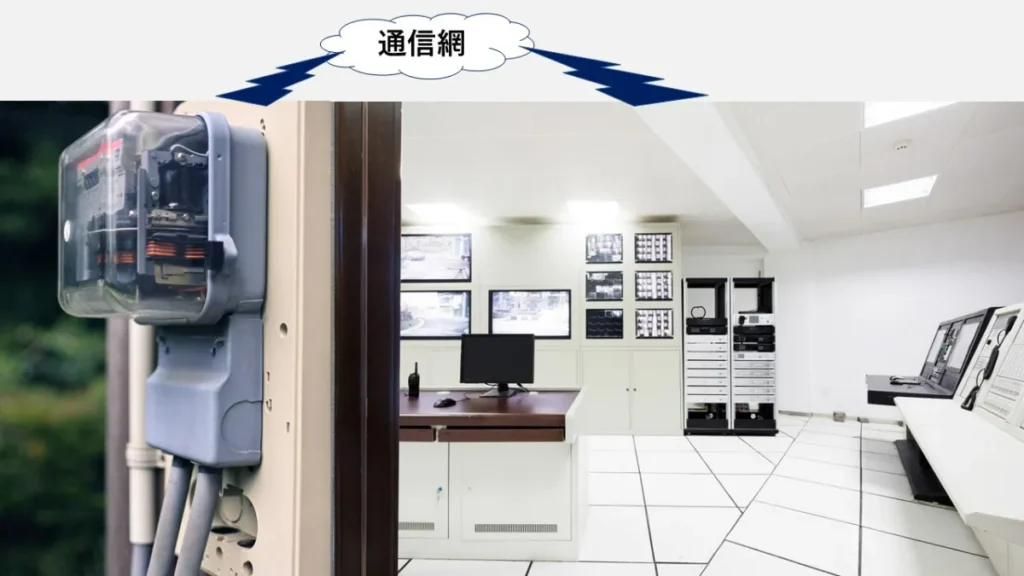
Smart meters and communication networks are designed for low power consumption, enabling long-term operation for 10 years—the effective lifespan of meters—using only built-in batteries. Additionally, U-Bus Air (1) enables multi-hop relay in a bucket brigade fashion between gas meters, and LPWA (2) is adopted for communication to the center system, featuring low power consumption and high-speed communication technology.
*1 U-Bus Air: An ultra-low power consumption communication method using the 920MHz band, enabling multi-hop relay between meters.
*2 LPWA (Low Power Wide Area) communication: A communication method that achieves long-distance communication with low power consumption.
LP Gas Smart Meters
The LP gas industry is also working on smart transformation. Using communication technology common to city gas smart meters, wireless communication terminals and systems that can be integrally attached to LP gas meters are being released one after another, with examples including Nichigas " Space Hotaru ", Mitsuuroko Creative Solutions " SmartOWL ", and Azbil Kimmon " Gas Mieール ".
Benefits of Introducing Gas Smart Meters
The benefits of introducing gas smart meters with communication functions are not limited to streamlining meter reading operations. Let's look at various benefits.
Remote Meter Reading • Remote Shutoff/Opening for Operational Efficiency
Gas usage data from each household is automatically read by smart meters and sent to the gas company's center system. Since meter readers no longer need to visit each household to read gas meters, significant labor savings can be achieved. Additionally, shutoff and opening can be performed remotely as needed, enabling efficient on-site operations.
In condominiums with auto-lock systems, which have been increasing in recent years, meter reading and shutoff/opening operations can be inconvenient, but the remote meter reading • remote shutoff/opening functions improve efficiency.
Safety Assurance and Early Recovery in Emergencies • Disasters
Gas leaks occurring during emergencies or disasters are detected early and shut off remotely. During recovery, opening can be performed remotely. In the event of an earthquake shutoff, automatic restoration occurs. Since safety information can be monitored remotely, it also helps in early detection of gas supply troubles.
While conventional microcomputer meters have sufficient safety functions, smart meters offer additional benefits such as monitoring safety information and performing remote shutoff/opening.
Data Utilization
It is also expected that data acquired by smart meters will be utilized to connect to new services. Gas usage data is being considered for energy-saving proposals and elderly monitoring services, while data from built-in seismic sensors is being explored for use in building design and urban development.
Current Status and Challenges of Gas Smart Meter Adoption
The three city gas operators—Tokyo Gas, Osaka Gas, and Toho Gas—are jointly developing smart meter systems and taking coordinated steps for implementation, scheduled to begin sequentially in fiscal year 2024. Tokyo Gas has been replacing meters with smart meters since March 2019 and has been sequentially starting remote meter reading since June 2021, but it can be said that smart meter operation has only just begun.
One reason for the time required to transition to gas smart meters is that microcomputer meters with safety functions have already been installed ahead of time. Additionally, the need for gas-specific technology development and associated costs, high equipment prices, and post-implementation communication costs also appear to be burdens. To achieve nationwide adoption of smart meters, how to reduce these costs is an important challenge.
Summary
The introduction of smart meters is expected to bring further strengthening of gas facility safety and operational efficiency. Although significantly behind electricity, the introduction of gas smart meters will likely progress in the future. Cost reductions to support adoption are anticipated.