

In recent years, smartification has been progressing at various scales, and we now frequently hear terms such as smart homes, smart offices, and smart buildings. While it is clear that smartification greatly improves convenience, one concern is power consumption. Here, we will examine changes in electricity costs when homes, offices, and buildings are made smart.
Home Smartification and Electricity Costs
Home Smartification
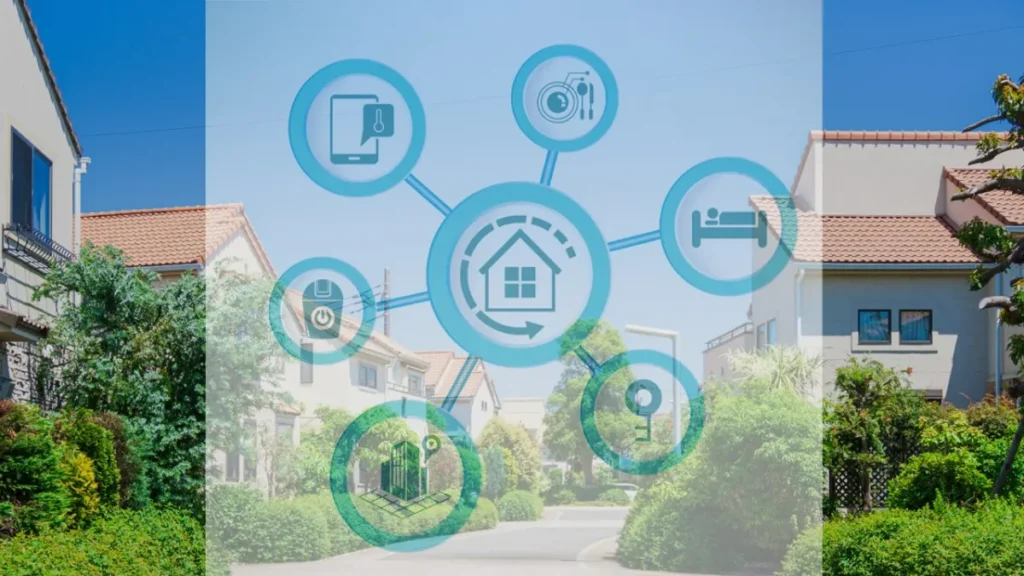
Home smartification is often discussed using two terms: " smart home " and " smart house ". " Smart homes " aim for efficient and comfortable living using IoT (Internet of Things)-compatible residential equipment and appliances. " Smart houses " often refer to residences that optimize energy operation to pursue energy conservation • and eco-friendliness.
In smart homes, residential equipment and household appliances connected to the internet can be operated via smartphones or AI smart speakers. Applications span a wide range, including lighting fixtures, TVs, air conditioners, water heaters, intercoms, smart locks, window shutters, and robot vacuum cleaners.
In smart houses, the following keywords have traditionally been central:
- Energy Conservation: Reducing energy consumption using LED lighting and high-efficiency water heaters
- Energy Creation: Generating energy with solar power systems
- Energy Storage: Storing energy in residential batteries and electric vehicles
- HEMS (Home Energy Management System)
Visualizing the usage of household lighting and heating/cooling to optimally manage energy consumption
Recently, with further smartification, even smart houses can now remotely control residential equipment and appliances by connecting them to the internet. By incorporating IoT technology, homes are increasingly meeting needs for convenience and comfort.
What About Home Electricity Costs?
According to materials from the Agency for Natural Resources and Energy, power consumption in households is dominated by air conditioners, refrigerators, and lighting, which account for over 50%. When aiming for power savings through smartification, controlling air conditioners and lighting is key.
When air conditioners and lighting are made smart, you can check from outside whether you forgot to turn them off using your smartphone. Since you can operate them ON-OFF remotely, you can reliably eliminate wasted power consumption. Additionally, in homes linked with HEMS, power usage is visualized, allowing you to control air conditioners and lighting to achieve power savings.
Furthermore, in homes equipped with solar power systems, " energy creation " is achieved, allowing electricity costs to be significantly reduced.
Office • Building Smartification and Electricity Costs
Office • Building Smartification
Offices that advance smartification using the latest digital technologies such as IoT and AI, aiming to improve operational efficiency and comfort • convenience, are called " smart offices ".
In smart offices, AI cameras and IoT sensors are installed to acquire • analyze data such as temperature, humidity, presence • number of people in the office, automatically controlling air conditioning systems and lighting equipment. Fine-grained control keeps the office environment in an optimal state at all times. It is also effective for understanding and managing the usage status of each floor and conference room.
" Smart buildings " realize this across entire buildings, centrally managing facilities and equipment within the building to appropriately control lighting and air conditioning systems in each office. The core system is BEMS (Building Energy Management System), which visualizes energy consumption and aims for optimal energy management.
Reference:What is BEMS for Efficient Building Energy Management?
What About Office • Building Electricity Costs?
While lighting and air conditioning were previously operated uniformly, BEMS automatic control enables operation control in areas and time periods with fewer people, making it possible to reduce power consumption. In many cases, BEMS helps lower contracted power, resulting in significant electricity cost reductions.
Contracted power is determined by the peak power usage during the highest consumption period over the past year. If BEMS eliminates wasteful usage and reduces peak power, it becomes possible to lower contracted power. Since the basic rate is determined according to contracted power and remains unchanged for one year, lowering contracted power can significantly reduce electricity costs.
Smart Building Case Studies
We introduce two examples that have achieved smartification and demonstrated results in reducing energy consumption, including power consumption.
Hiroshima City General Rehabilitation Center
Hiroshima City introduced BEMS to its General Rehabilitation Center in fiscal year 2013. Comparing power consumption before and after introduction, the city announced approximately 10% annual energy savings.
Lazona Kawasaki Toshiba Building
A 15-story office building where Toshiba is based, completed in 2013. It is a smart building with smart BEMS. Despite being a large-scale building with a total floor area exceeding 100,000 square meters, it has reduced annual primary energy consumption (*) by 58% compared to typical office buildings.
* Energy consumed in homes and buildings converted to heat quantity.
By detecting human movement using image sensors and automatically controlling lighting, lighting power was reduced by 12.8%. This is also applied to air conditioning and elevator control, achieving energy savings. (From materials on Toshiba Corporation's official website)
Summary
Whether in homes or offices, the trend toward smartification will not stop. While initial costs are substantial depending on scale, it is clear that implementation is effective in reducing electricity costs. Combined with benefits such as comfort, convenience, and improved workplace efficiency, expectations for smartification will likely continue to grow.