

Energy efficiency in large-scale facilities is evolving significantly through smart building technology. By utilizing IoT and AI, it has become possible to simultaneously achieve energy usage optimization, operational efficiency improvements, and environmental consideration. This article provides an easy-to-understand explanation of smart building technology fundamentals, specific implementation cases, and future technology trends.
Smart Building Technology and IoT •AI-Driven Energy Efficiency
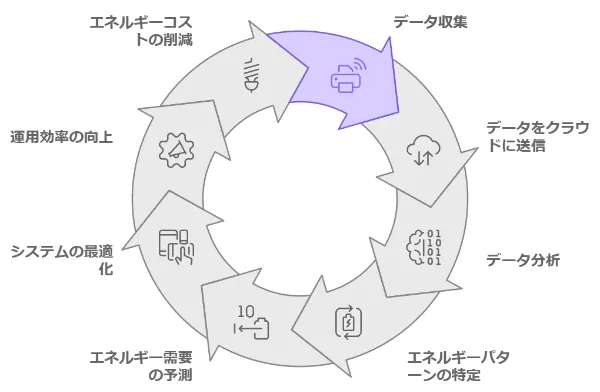
Smart building technology is a system that utilizes IoT (Internet of Things) and AI (Artificial Intelligence) to integrally manage equipment and systems within buildings, maximizing energy efficiency. IoT sensors collect real-time data on power consumption, temperature, humidity, lighting levels, and occupancy status within buildings. This data is transmitted to cloud platforms where AI performs analysis.
The role of AI is to identify energy consumption patterns and waste based on the vast amount of collected data and propose optimal energy usage. Furthermore, AI uses predictive analytics to forecast energy demand in advance and automatically adjusts equipment to prevent excessive energy use during peak times. This maintains stable power supply and achieves energy cost reduction.
Additionally, smart building technology automatically optimizes systems such as air conditioning and lighting based on weather and user behavior patterns, providing a comfortable and efficient environment. By centrally managing energy usage across the entire building through BEMS (Building Energy Management System), operational efficiency is also improved.
These technologies reduce wasted energy consumption and enable efficient and sustainable energy management. Particularly in large-scale facilities, the effects of smart building technology are remarkable, contributing significantly to reducing energy consumption.
Benefits of Smart Building Technology
Implementing smart building technology in large-scale facilities offers many benefits.
Energy Cost Reduction
By automatically controlling lighting and air conditioning using AI and IoT, wasteful energy consumption is reduced, enabling energy cost reduction. This also contributes significantly to the government's CO2 reduction targets.
Improved Operational Efficiency
By implementing BEMS, energy usage across the entire facility can be centrally managed, significantly improving operational efficiency. Optimizing equipment using AI allows comfortable environments to be maintained with less energy, and labor cost reductions through automation of security and cleaning operations can also be expected.
Environmental Protection
The spread of smart building technology leads to CO2 emission reductions and is an important step toward a sustainable future. Particularly when combined with renewable energy, energy efficiency can be maximized while minimizing environmental impact.
Enhanced User Comfort
Beyond energy management efficiency, smart building technology also has elements that enhance user comfort. By utilizing data collected by AI to maintain optimal temperature and lighting, a more comfortable environment is provided.
Specific Cases
Smart building technology has been implemented in various facilities including office buildings, factories, and sports facilities. Here are specific implementation cases.
Tokyo Portcity Takeshiba (Office Building)
At Tokyo Portcity Takeshiba, data is collected and centrally managed using IoT sensors based on a smart city platform. This technology enables real-time management of data on pedestrian flow, traffic, and natural environment within the area, aiming to achieve both social issue resolution and economic development. It also contributes to future urban planning as a pilot implementation area for "Smart Tokyo".
IHI Smart Factory (Manufacturing Facility)
At IHI's smart factory, robot systems are combined with AI technology to improve work efficiency and reduce employee burden. AI analyzes sensor information, and work support robots maintain a comfortable work environment, improving overall factory productivity. This provides a safe and efficient work environment.
Showa Denko Dome Oita (Sports Facility)
At Showa Denko Dome Oita, a congestion monitoring system using AI cameras and an app providing real-time information have been implemented, allowing visitors to check congestion status at shops and restrooms. This improves visitor comfort and enhances facility operational efficiency.
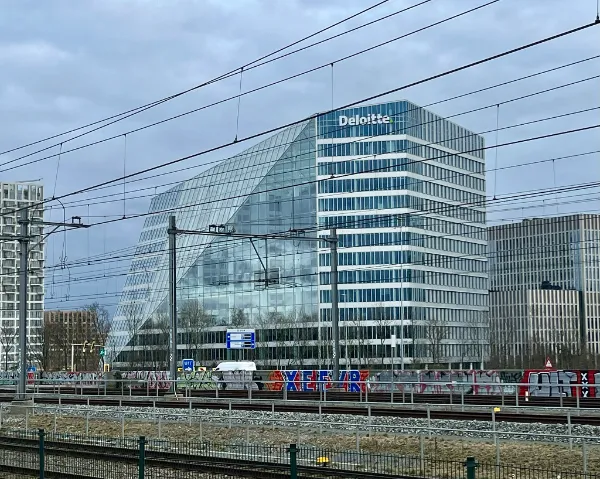
The Edge •Amsterdam", Netherlands •(Office Building)"
At The Edge •office building in Amsterdam", Netherlands", over 30,000 IoT sensors and the smartphone app "Mapiq "are used to streamline energy management and seat reservations throughout the building. Additionally, a thermal storage heating and cooling system at 130 meters underground reduces power consumption by 70% compared to conventional office buildings. This also improves worker productivity and well-being.
In these cases, technologies such as IoT sensors, AI data analysis, smartphone apps, and energy management systems are commonly used, resulting in multifaceted benefits including improved energy efficiency, enhanced comfort, and reduced operational costs. Smart building technology is expanding beyond office buildings to manufacturing and sports facilities, with applications advancing across diverse fields.
Future Trends and Technological Innovation
The future of smart building technology holds even more possibilities. With the evolution of AI and machine learning, energy management systems will become increasingly sophisticated, with advances in highly accurate predictive analytics and automation. Additionally, the introduction of edge computing, digital twins, and blockchain technology will improve data management and transparency in energy transactions both inside and outside buildings, achieving more efficient and secure energy management.
Furthermore, as renewable energy adoption progresses, smart building technology will effectively integrate •and manage energy from solar and wind sources, minimizing environmental impact while achieving stable energy supply.
Conclusion
Smart building technology is a key technology that brings innovation to energy management in large-scale facilities and enables efficient and sustainable operations. Through the evolution of IoT and AI and the integration of new technologies, multifaceted benefits such as improved energy efficiency, reduced operational costs, environmental protection, and enhanced comfort can be achieved, and further implementation is expected going forward.