

DX (Digital Transformation) is advancing, and the evolution of sensing technology is attracting attention. In recent years, new technologies such as battery-free sensors, real-time processing by AI, and digital twins that optimize the operation of cities and buildings are being put into practical use. This article introduces the latest trends in next-generation sensing technology and examples of its application.
1. Energy Harvesting Sensors
Technology Overview and Benefits
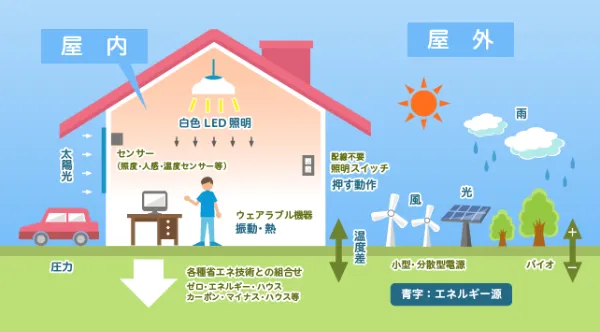
Energy harvesting is a technology that converts minute energy from the environment, such as heat, • vibration, • and magnetic fields, into electrical power for use. Energy harvesting sensors, which incorporate this technology into sensors, operate without batteries. Since there is no need to install communication or power lines, installation locations can be chosen flexibly, and they also contribute to reducing maintenance costs. In recent years, development of new technologies such as improved conversion efficiency and magnetic field utilization has progressed, accelerating implementation in smart infrastructure.
Application Examples
A research team at the Massachusetts Institute of Technology in the United States has developed a self-powered sensor that captures energy from surrounding magnetic fields and can operate long-term without batteries or external power sources. This technology is expected to be applied to remote monitoring applications that require continuous data collection.
In large domestic office buildings, commercial facilities, and schools, EnOcean technology, which self-generates power using minute pressure and light energy, is widely adopted. By automatically controlling lighting and air conditioning in conjunction with human presence detection, significant energy savings are achieved. An office building in Ibaraki Prefecture has successfully achieved ZEB (Net • Zero • Energy • Building) status by combining ground-source heat pumps and solar power generation, realizing both energy conservation and renewable energy.
2. LPWA, • 5G, and Low-Power Sensors
Technology Overview and Benefits
LPWA (LoRaWAN, NB-IoT) is a wireless communication technology that combines long-distance communication with low power consumption. LoRaWAN supports communication distances up to 15 km and battery life of over 10 years, while NB-IoT supports stable communication even underground. By combining these technologies with low-power sensors, energy-efficient and wide-area data collection is achieved. They are also highly compatible with self-powered sensors and suitable for continuous monitoring in remote locations. Furthermore, by using 5G in combination, real-time control and high-precision monitoring become possible.
Application Examples
In Germany, remote monitoring via NB-IoT has reduced failure rates of pneumatic equipment, and in Japan, LoRaWAN sensors have reduced wiring costs. Additionally, smart waste bins are operated via LoRa networks to reduce environmental impact. Integration with digital twins is also progressing, with city-wide optimization expected.
3. AI-Driven Edge Sensing
Technology Overview and Benefits
AI-driven edge sensing is a technology that performs AI processing near sensors, reducing dependence on the cloud. Its features include low latency and reduced power consumption and communication load. It also offers advantages in terms of security and privacy, and AI model updates via OTA (over-the-air) are possible. Expansion is expected in the future along with the development of low-power chips.
Application Examples
In European manufacturing, advancement of equipment maintenance using IoT and AI is widely promoted. For example, in Germany, research • and practical application of predictive maintenance for bearing degradation using sensors and AI is progressing. In Shimizu Corporation's smart buildings, linking entry/exit detection with air conditioning control has achieved approximately 35% power reduction. Tokyo Electric Power Company uses AI to integrate generation capacity and demand management, improving grid stability.
4. Biosensing and Application to Smart Buildings
Technology Overview and Benefits
Biosensing is a technology that measures information such as CO2 concentration, • temperature and humidity, • heart rate, • and body temperature in real time, achieving both comfort and health management. By combining with AI analysis, prediction of physical condition changes and personalized advice become possible, contributing to improved labor productivity. It has high compatibility with ZEB and health management, and widespread adoption is expected in the future.
Application Examples
Wearable sensors monitor employee health, and AI-based health support is also possible. In smart buildings, automatic control for preventing heatstroke and infectious disease risks is also progressing. In ZEB-certified buildings, environmental sensors and central control are linked, and automatic ventilation based on CO2 concentration reduces health risks.
5. Integration with Digital Twins
Technology Overview and Benefits
Digital twin is a technology that immediately reflects data collected by IoT sensors in virtual space, realizing operations and simulations linked to reality. Real-time monitoring, predictive management, and anomaly detection become possible, leading to efficient energy control and maintenance. City-wide applications are also progressing.
Application Examples
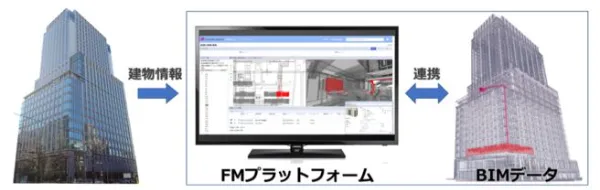
At Kajima Corporation's Obic Midosuji Building, BIM (Building • Information • Modeling) and sensors are utilized to achieve predictive maintenance and remote monitoring of facilities. At the city level, urban digital twins that integrate diverse data such as traffic, • pedestrian flow, • and weather are advancing traffic congestion prediction, disaster evacuation support, and infrastructure management. In the future, energy optimization across facilities is becoming a reality.
Summary
Next-generation sensing technology plays an important role in improving energy efficiency and accelerating DX. In particular, integration with energy harvesting, edge AI, and digital twins is making significant contributions to the realization of ZEB and smart cities. As technology continues to evolve, the construction of a sustainable and comfortable society will continue to progress.