

From smart home appliances to smart cities, as smartification progresses at various scales today, remarkable advances in smart buildings—which smartify entire buildings—are also attracting attention. Here, as basic knowledge about smart buildings, we will focus on two points: what smart buildings are and what they can actually do.
What Are Smart Buildings?
Smart buildings generally refer to buildings that have been smartified by utilizing the latest digital technologies such as IoT and AI. In smart buildings, data from IoT devices installed throughout the building can be centrally managed on a system, enabling automatic operation and mutual coordination. This aims to improve building management efficiency and energy conservation, enhancing comfort • and convenience for all users.
For example, in smart buildings, air conditioning and lighting in areas where people gather can be automatically adjusted according to the situation. In recent cases, systems have emerged where facial recognition at entrance gates allows users to move to their office floor without pressing elevator floor buttons. Both are solutions that emphasize user convenience in addition to benefits for building managers.
In recent years, the trend toward building smartification has progressed rapidly, with the majority of newly constructed or under-construction office buildings and mixed-use buildings becoming smart buildings. Cases of renovating existing buildings into smart buildings have also become prominent. Efforts toward smart buildings are currently being pursued broadly, not only in new construction but also in renovations, regardless of building scale.
IoT Devices and Building OS Supporting Smart Buildings
In smart buildings, IoT devices that collect various data are deployed throughout the building. These include equipment for air conditioning, lighting, disaster prevention, security, various sensors, cameras, and control devices.
What collects and manages data from all IoT devices in the building is the Building OS. It is a system that integrally manages the entire building, with the major feature of enabling seamless coordination and centralized management even between equipment from different manufacturers. In addition to sharing and controlling data, it also accumulates and transmits/receives data. Furthermore, AI can learn from accumulated data, making it possible to detect early signs of equipment failure and reduce running costs.
What Can Be Achieved with Smart Buildings?
Smart buildings offer significant benefits in building management. They also provide numerous solutions to create convenient and comfortable spaces for tenants and employees who use the building. Let's look at representative examples from the latest smart building cases to see what can be achieved.
For Building Managers
Energy Management Optimization
BEMS (Building Energy Management System) " visualizes " energy usage, enabling optimal control of air conditioning and lighting based on that data. This reduces power consumption and peak electricity demand, with expected effects of energy conservation, • CO2 emission reduction, and cost reduction.
Reference: " What is BEMS for Efficient Building Energy Management? " (https://haudi.jp/smartup/magazine/bems_introduction)
Automated Entry/Exit Management
Entry/exit management is automated using AI camera image recognition technology. At office entry/exit gates, registered users can pass through contactlessly, and temperature sensors are also installed to address infection control. There is also a function that immediately notifies security staff when suspicious persons are detected, improving safety for building users while streamlining security operations.
Labor Reduction Through Robots
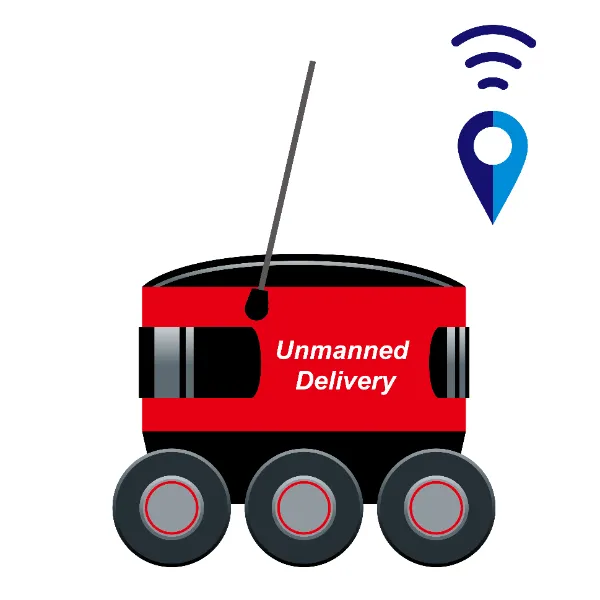
Self-propelled service robots have been put into practical use. These include cleaning robots, transport robots, and patrol security robots, which can move between floors in coordination with elevators. Labor cost reductions can be expected.
Early Detection of Equipment Failure Signs
By constantly monitoring with sensors, malfunctions in building equipment can be detected early. This allows for action before major failures occur.
For Tenants • and Employees
Entry/Exit Gate and Elevator Integration Function
Through facial recognition or BLE tag use, tenant company employees can pass through entry/exit gates touchlessly. Functions that integrate with elevators to move directly to office floors have also emerged, improving convenience.
Meeting Room Reservations
Tenant company employees can check the reservation • and usage status of their company's meeting rooms and desks in real time through smartphone apps, and can perform reservation, usage start, • and end operations.
Congestion Visualization
For tenant company employees, real-time congestion status of tenant-shared free spaces, elevator halls, restrooms, restaurants, etc. is distributed using dedicated apps and digital signage. This offers high convenience and helps resolve congestion.
Supporting Tenant Marketing
In commercial facilities, information such as the number, gender, and age of building users is compiled into statistics from sensor-collected data and provided to tenants (stores). Tenants can use this for customer attraction measures and sales forecasting. Congestion information for each tenant displayed on digital signage can also be utilized to improve customer attraction.
Summary
Smart buildings are buildings that enable both improved building management efficiency and energy conservation, as well as convenience • and comfort for all building users. There is no doubt that smart buildings will become the new standard in the future. Let's continue to pay attention to smart building initiatives that are making remarkable progress along with new technologies.