

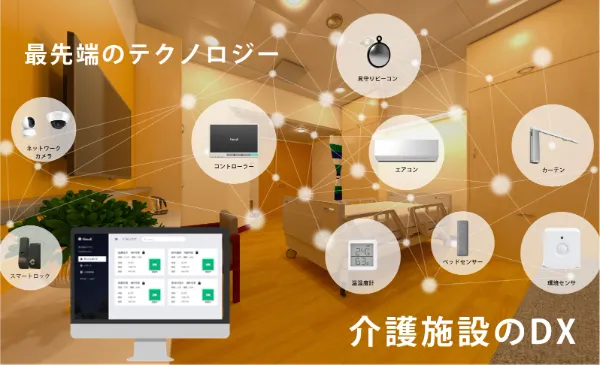
In Japan, where the declining birthrate and aging population continue to advance, nursing care DX that transforms the way care work is conducted cannot wait. Many care facilities have already begun introducing equipment and services utilizing the latest digital technologies. This article focuses on monitoring systems and introduces their functions and implementation benefits.
What is Nursing Care DX
DX (Digital • Transformation) is a concept referring to initiatives that fundamentally transform services, organizations, and operations themselves through the use of digital technology. As DX advances across all fields, the nursing care industry is no exception. Rather, there are many tasks in the care Sites that can be streamlined through digital technology, and it can be said that DX in nursing care is beginning to advance rapidly.
The number of facilities that have achieved operational efficiency and improved care service quality through the adoption of care software and monitoring systems has increased. In the future, the introduction of care robots is also anticipated. To remain a care facility chosen by users and staff, nursing care DX that transforms the care Sites is now required.

Overview of Monitoring Systems
Monitoring systems use digital technologies such as IoT and AI to primarily monitor elderly residents in care facility rooms. Because staff can quickly grasp residents' conditions remotely, they can reduce the burden on care staff while improving monitoring quality.
IoT (Internet of Things) is called " the Internet of Things " and refers to technology that enables various objects to connect to the internet for more convenient use. With this technology, you can operate home appliances from a smartphone or check current room temperature and humidity remotely.
Generally, the following devices are installed in rooms:
- Motion sensors
- Bed sensors
- Temperature and humidity sensors
- Thermohygrometers
- Open/close sensors
- Facial recognition cameras
- Vital sign measurement devices
- Beacons
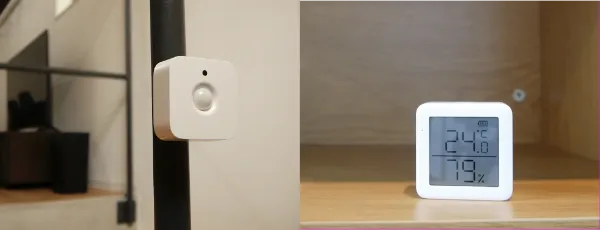
Data detected by sensors, such as residents' conditions and room environments, is displayed in real-time on care staff's computers, smartphones, and tablets. Alerts are sent when abnormalities or warning signs are detected.
For example, when room temperature becomes abnormally high in summer, residents may develop heatstroke without realizing it. If a monitoring system is in place, the room temperature sensor first detects this, nearby care staff notice the smartphone alert, and rush to respond—this entire sequence proceeds smoothly.
Data collected by sensors and vital sign measurement devices is not only used in real-time but can also be connected to care record systems. Additionally, app development and integration with IoT devices are advancing, and monitoring system functions are expected to become even more robust going forward.
Benefits of Implementing Monitoring Systems
Implementing monitoring systems offers benefits to both care service providers and recipients. Let's examine what specific benefits can be expected.
Prevention of Accidents and Troubles
There are many cases where residents fall because care staff cannot assist in time when they leave their beds. With monitoring systems, sensors detect movement and notify staff, enabling them to quickly provide assistance. Early response to bathroom emergencies also becomes possible, preventing accidents and troubles before they occur.
Maintaining Comfortable Room Environments
Temperature and humidity sensors enable monitoring of each room's conditions. This is particularly useful for preventing heatstroke, as many elderly people dislike air conditioning.
Reducing Rounds and Room Visits
Since residents' conditions and environments can be monitored without visiting rooms, the frequency of rounds and visits can be reduced. When vitals are automatically recorded, morning visits also become unnecessary, further reducing the burden on care staff.
Operational Efficiency Through Automatic Recording
Because sensor data and vital sign measurement device data are automatically recorded, much of the manual input work becomes unnecessary and input errors are prevented. Operational efficiency advances.
Resolving Staff Shortages
As operational efficiency advances, the burden on care staff is reduced, ultimately contributing to resolving staff shortages. By creating an attractive work environment, new staff become easier to recruit, and effects such as reduced turnover and improved retention can be expected.
Summary
Among nursing care DX initiatives, the monitoring systems examined here have already significantly expanded their implementation track record and appear to be producing results. While implementation costs are not small, they represent an unavoidable step for solving challenges facing the care industry, such as chronic staff shortages.