

Rental space businesses that rent out spaces by the hour, such as shared offices and meeting rooms, are attracting attention. The key to business success is unmanned operation. Unmanning services benefits both owners and space users. Let's look at systems utilizing the latest tools.
What is an unmanned management system?
For unmanned management of rental spaces, it is common to introduce a self-check-in management system and smart locks (electronic keys). Here are the latest systems.
How self-check-in works
By introducing a self-check-in management system, there is no need to have staff at the facility. This is because users can check in themselves using a PIN code or smartphone app.
The latest systems allow the entire process for facility use (user registration, reservation, check-in/check-out, payment, entry/exit) to be completed on an app. Check-in is completed by scanning a QR code before entering. The linked smart lock unlocks the door. Upon check-out, automatic payment is made via credit card.
Even more convenient services
Services that do not require user registration and do not use a dedicated app have also begun. Users simply scan the QR code installed at the entrance of their desired facility. No reservation is needed, making walk-in use easy.
At facilities with this service, integration with smart locks allows automatic door unlocking immediately after payment is completed. Check-in and payment are completed with the dedicated QR code posted on the entrance door, and no user registration or dedicated app is required, making it a relatively simple system for achieving unmanned operation.
Cashless payment
Since the system does not require face-to-face interaction, cashless payment is standard. In addition to payment with pre-registered credit cards, some systems also support PayPay.
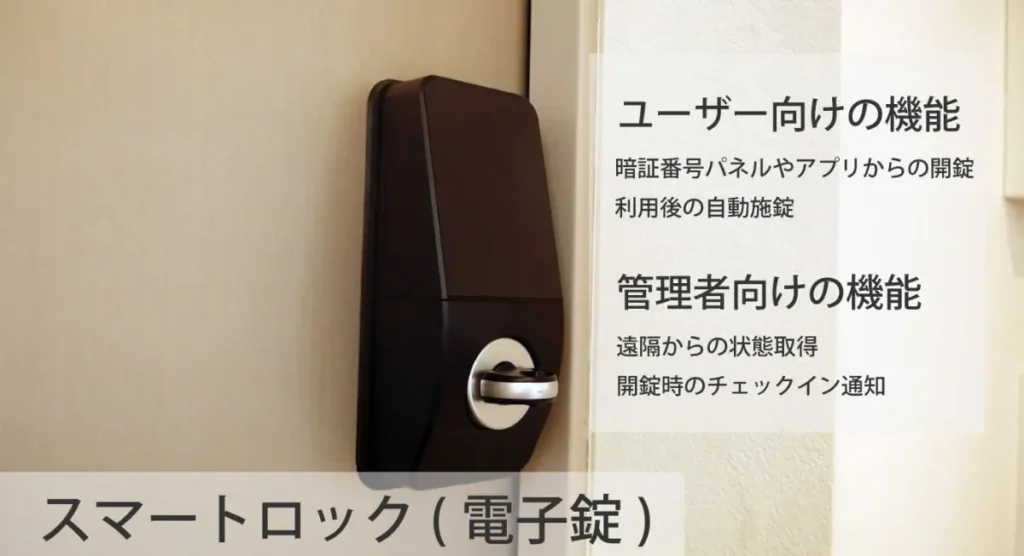
Smart locks (electronic locks)
Smart locks are electronic locks that lock and unlock doors through electronic devices such as smartphones. When introduced to rental spaces, they eliminate the hassle of key management and handover, making them essential items when considering unmanned operation of rental spaces.
Currently, many smart locks are sold domestically. Unlocking methods vary, but for rental spaces, those using PIN codes, smartphone apps, or QR codes are common.
Integration with reservation systems or self-check-in systems enables automatic unlocking, further enhancing convenience. When selecting a smart lock, it is important to consider it together with the system to be introduced.
Benefits of system implementation
What benefits can be expected for rental space operations by implementing such systems? Let's look at them specifically.
Reduced labor costs
Reception and cashier staff become unnecessary, and unmanned operation becomes possible, significantly reducing labor costs. Other tasks are also automated and streamlined, reducing labor costs.
Enhanced security
People's entry and exit and key opening and closing can be confirmed, and remote key operation is possible, allowing rental spaces to be operated safely and securely.
24-hour operation possible
Since there is no need to assign staff to , operating hours can be set freely. Meeting the needs of people who want to work at night, 24-hour operation becomes possible.
Efficiency through cashless payment
Since cashless payment is inevitable, not only are cashiers unnecessary, but preparing change and settlement processing at are eliminated, streamlining operations and improving efficiency.
Contactless operation advances as infection control
Face-to-face reception and key handover become unnecessary, and unmanned operation becomes standard, reducing the risk of infectious disease transmission.
Becoming a rental space chosen by users
With benefits such as 24-hour reservations and easy smartphone operation, convenience for users increases, leading to an expected increase in users.
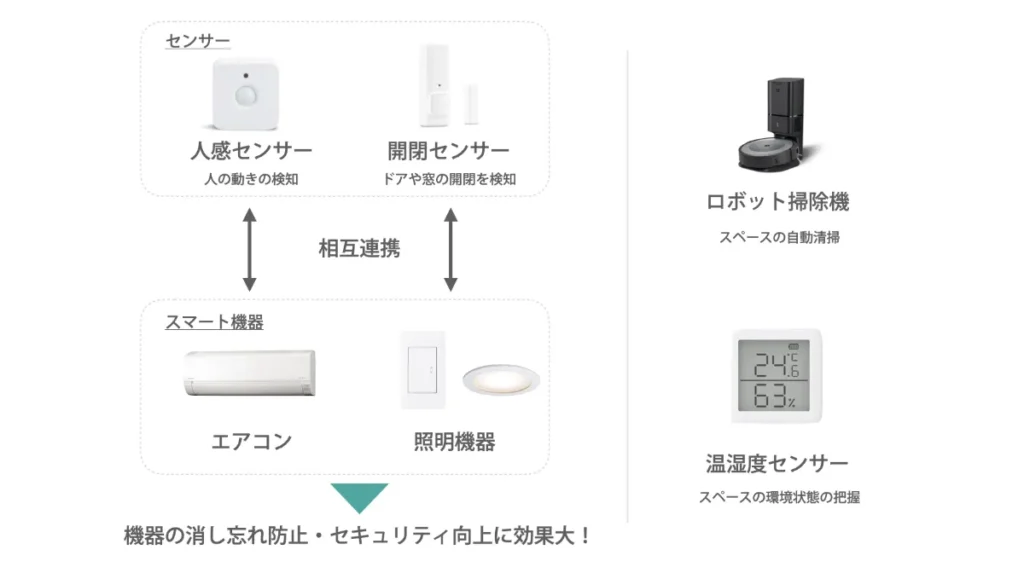
Introduction of additional smart devices
Sensors
Motion sensor
A sensor that detects human movement and notifies. By integrating with the system, air conditioning and lighting can be automatically turned off when no one is in the space, preventing wasteful energy consumption and reducing space management costs.
Open/close sensor
A sensor that notifies the opening and closing status of windows and doors. It can notify the administrator when a user leaves with windows or doors open.
Robot vacuum cleaner (applied function)
By introducing a robot vacuum cleaner, spaces can be cleaned remotely. Keeping spaces clean with frequent cleaning will make them more likely to be chosen by users. However, cable placement must be considered to facilitate cleaning by the robot vacuum, and users need to put away chairs when leaving.
System implementation examples
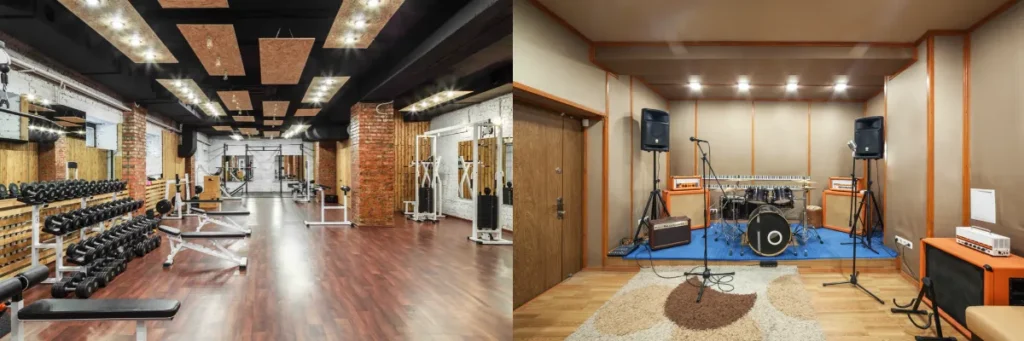
Currently, a wide variety of rental space facilities are already being operated with management systems. They seem to be established as services that can be easily used not only for business but also by individuals or small groups.
- Shared office
- Telework booth
- Meeting room rental
- Rental studio (photography dance music)
- Sports gym
Summary
Unmanned management systems benefit both operators and users. Rental spaces are expected to see increasing demand, but to succeed as a business, we recommend introducing a system that fits each facility and aiming for unmanned operation.